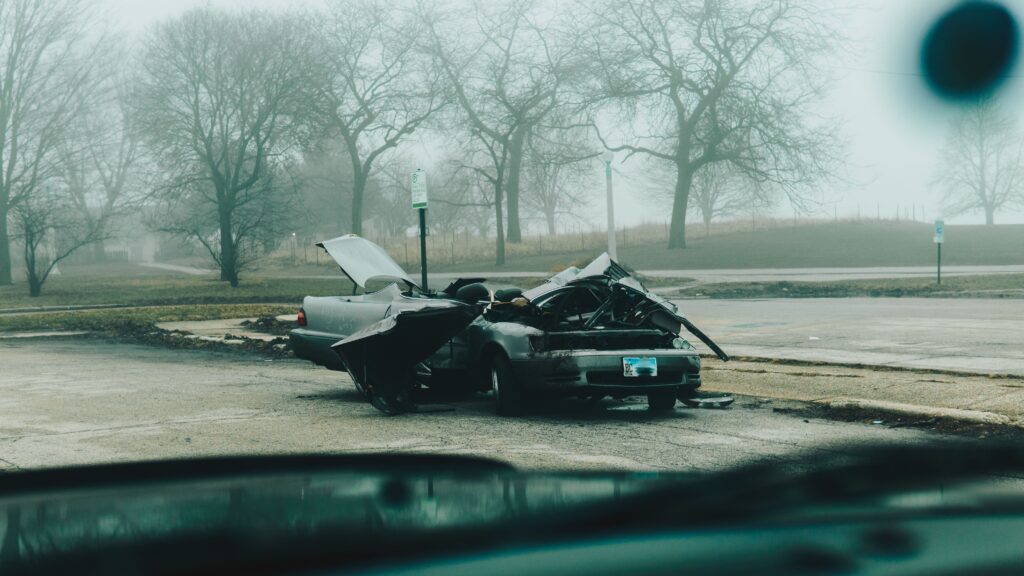
A Florida driver gets into an accident on Monday. The car cannot be driven, so a tow truck takes it away.
By Thursday, the driver is still waiting for an insurance adjuster to call.
Then comes the surprise: the towing company wants payment for the tow, daily storage, and other charges before releasing the vehicle.
The driver assumed insurance would handle everything.
But a covered car accident does not automatically mean every towing and storage charge will be paid.
This is one of the most stressful financial surprises that can follow a crash. Even when the damage to your car is covered, a disagreement over where the vehicle was stored, how long it remained there, or whether the charges were reasonable can leave you facing an unexpected bill.
For Florida drivers, understanding the difference between towing coverage, accident-related claim expenses, and tow-yard charges is essential.
This guide explains who may be responsible, what Florida law says, how to deal with a vehicle held at a towing facility, and what to do before the charges grow.
The First Question: Who Ordered the Tow?
Not every tow after an accident happens the same way.
Sometimes a driver calls a roadside assistance provider.
Sometimes an insurance company arranges transportation.
Other times, law enforcement orders a vehicle removed because it is disabled, obstructing traffic, or creating a safety hazard.
These situations can affect which company receives the vehicle, how the charges are determined, and what steps are required to retrieve it.
Consider three examples.
Example 1: You arrange the tow.
After a minor crash, you call your insurer and receive instructions to tow your vehicle to a participating repair facility.
If the loss and transportation expense qualify under the policy, the insurer may pay or reimburse an eligible towing charge.
Example 2: Police arrange the tow.
After a serious crash, your vehicle cannot safely remain on the road. A towing company removes it to a storage facility.
The tow and storage may generate charges before the insurance company has inspected the vehicle.
Example 3: You have no applicable coverage.
You carry only basic Florida auto insurance and cause a collision that disables your own vehicle.
If you lack collision coverage and any applicable towing benefit, you may be responsible for your vehicle’s towing and storage expenses.
The important point is that the reason for the tow, the party responsible for the accident, and the applicable insurance coverage all matter.
Does Florida Car Insurance Cover Towing After an Accident?
It can, but the answer depends on the policy and the circumstances.
The Florida Department of Financial Services describes towing and labor coverage as protection for emergency road service and towing, subject to the limits shown in the policy.
However, that optional coverage is not the only situation in which an insurer may consider towing expenses.
If your vehicle is damaged in a covered collision and must be transported for inspection or repair, reasonable accident-related towing costs may be considered during the claim, depending on the policy and circumstances.
That does not guarantee payment of every invoice.
An insurer may question an excessive charge, an unnecessary additional tow, or storage that continues longer than reasonably necessary.
Before authorizing transportation, ask your insurer:
- Is this tow covered under my claim or roadside assistance benefit?
- Is there a dollar limit?
- Where should the vehicle be taken?
- Do you have an approved towing provider?
- Will the tow be paid directly, or must I request reimbursement?
- What should I do if law enforcement has already arranged a tow?
If you are still at the accident scene, prioritize safety and follow lawful instructions from emergency personnel. Do not delay removal of a hazardous vehicle while debating insurance coverage.
Who Pays the Tow Bill When Another Driver Causes the Accident?
If another driver caused the accident, you may be able to seek reimbursement for reasonable towing expenses through the responsible driver’s property damage liability coverage.
But several details matter.
The other insurer must evaluate liability, available coverage, the reasonableness of the expense, and the documentation supporting the claim.
A police report does not automatically guarantee that the other insurer will accept full responsibility.
The at-fault driver’s policy may also have limits that affect payment.
Florida’s basic Property Damage Liability requirement is generally $10,000 for most registered motor vehicles subject to the state’s financial responsibility requirements.
If an accident causes extensive vehicle damage, towing costs, and damage to other property, the available liability limit may be insufficient to pay every claim in full.
If you have collision coverage, your own insurer may be able to handle the vehicle damage claim first, subject to your deductible and policy terms, and then pursue recovery from a responsible party when appropriate.
Ask your adjuster how towing and storage expenses should be submitted and whether the insurer intends to recover those expenses.
Do not assume the other insurer will automatically pay the tow yard before liability has been established.
Towing Coverage vs. Collision Coverage vs. Storage Charges
These are different financial issues.
| Expense or Situation | Coverage That May Apply | Important Limitation |
|---|---|---|
| Emergency tow after a breakdown | Optional towing and labor or roadside assistance | Subject to benefit limits and exclusions |
| Tow after a covered collision | Collision claim or applicable towing benefit | Payment depends on policy and reasonable necessity |
| Tow after a covered theft or storm loss | Comprehensive claim or applicable towing benefit | Depends on circumstances and policy |
| Tow caused by another driver’s negligence | Responsible driver’s property damage liability | Liability, limits, and reasonable costs must be established |
| Daily tow-yard storage | May be considered as a reasonable covered claim expense | Not automatically unlimited |
| Unnecessary storage delays | May become the vehicle owner’s responsibility | Insurer may dispute avoidable charges |
| Tow when no applicable coverage exists | Often vehicle owner | Another responsible party may still be liable |
The table is a general guide. Your policy, claim circumstances, and applicable law determine the outcome.
Why Storage Fees Can Become More Expensive Than Expected
A vehicle may spend several days in a tow yard before anyone decides what happens next.
The insurance company may need photographs.
An adjuster may need to inspect the damage.
The vehicle may be declared a total loss.
Or the driver may be waiting to learn whether the other insurer accepts liability.
During that time, storage charges can accumulate.
Consider a purely illustrative scenario.
A tow costs $180, and storage costs $45 per day.
After seven billable storage days, the combined amount would be $495.
After fourteen billable storage days, it would be $810.
These are hypothetical figures, not verified Florida tow-yard rates. Actual lawful charges depend on the circumstances, applicable local rules, and the operator’s authorized fees.
The example demonstrates why a delay can become expensive even if the vehicle itself is not being repaired.
It is important to distinguish a necessary claim-related delay from a delay that could reasonably have been avoided.
If an insurer tells you to move the vehicle to a repair shop or another facility, ask for the instructions in writing and arrange the move promptly when it is safe and lawful to do so.
Florida Law: What Tow Yards Can Charge
Florida Statute §713.78 addresses liens for recovering, towing, and storing vehicles and vessels.
The statute is important because it establishes rules for certain towing and storage operators, including permitted charges, notices, invoices, inspections, and vehicle-release procedures.
Under the statute, a towing-storage operator may charge fees within the categories authorized by applicable law or a qualifying written agreement.
Depending on the circumstances, charges may be governed by county or municipal rules, Florida Highway Patrol authorization, or other applicable statutory provisions.
This means there is not one universal towing or daily storage price that applies to every Florida accident.
Ask for the rate sheet
Florida Statute §713.78 requires covered towing-storage operators to maintain a rate sheet listing fees for recovery, removal, and storage.
The operator must post the rate sheet at its place of business and make it available upon request to the vehicle owner, lienholder, insurer, or authorized agent.
If you are present before the vehicle is attached to the tow truck, the statute also contains a requirement to furnish the rate sheet in applicable circumstances.
A fee exceeding the required rate sheet is deemed unreasonable under the statute.
Request an itemized invoice
The law also requires an itemized invoice for a completed tow, generally available no later than one business day after the tow is completed or the operator has obtained all necessary information.
The invoice must contain specified information, including the towing charge, daily storage rate, and other applicable fees.
If a tow-yard representative gives you only a total amount, request the itemized invoice.
You need to understand what you are being charged for before deciding whether the amount is correct.
Understand the six-hour storage rule
Under §713.78, when a qualifying towing-storage operator obtains a lien in the circumstances described by the statute, a storage fee may not be charged if the vehicle is stored for less than six hours.
Do not interpret this as a promise of six free hours in every towing situation. The statute’s conditions matter.
If a charge appears inconsistent with the applicable law, ask the operator to identify its basis.
Official Florida statute: https://www.flsenate.gov/Laws/Statutes/2025/713.78
Can a Tow Yard Refuse to Release Your Car?
A towing-storage operator may have a statutory lien for qualifying unpaid charges.
That can complicate retrieval of the vehicle.
However, Florida law also provides procedures governing notice, access, and release.
Section 713.78 includes requirements concerning inspections and access by eligible owners, lienholders, insurers, and their agents when the necessary documentation is presented.
It also provides judicial procedures for disputes over whether a vehicle was wrongfully taken or withheld or whether charges were wrongfully imposed.
If you believe the towing company is refusing access or charging improper fees, document the situation.
Ask for the exact amount due, an itemized invoice, the rate sheet, and the legal basis for any disputed charge.
Do not assume you can simply take the vehicle without satisfying lawful release requirements.
If the dispute involves a substantial amount or threatened sale of the vehicle, seek qualified Florida legal advice promptly.
Seven Steps to Take After Your Car Is Towed From an Accident
1. Find out exactly where the vehicle is located
Ask the towing company or responding law-enforcement agency for the storage facility’s name, address, and telephone number.
Record the tow company’s name and any reference number.
Do not rely on a vague description such as “the local impound yard.”
You need the actual location.
2. Contact your insurer immediately
Tell your insurer that the vehicle has been towed and may be accumulating storage charges.
Provide the facility’s contact details.
Ask whether the insurer wants the vehicle inspected at that location or moved elsewhere.
3. Ask when storage charges begin
Contact the storage facility.
Request the daily rate, any other applicable fees, the current balance, and the requirements for release.
Ask for the rate sheet and an itemized invoice.
Keep a record of the representative’s name and the time of the conversation.
4. Confirm who will arrange the next move
If the vehicle must be transferred to a repair shop or salvage facility, establish who is responsible for arranging transportation.
Do not assume the insurance company has scheduled a second tow merely because an adjuster knows where the vehicle is.
Get clear instructions.
5. Protect your personal belongings
Ask the facility about lawful procedures for retrieving belongings from the vehicle.
Florida law contains provisions addressing access to personal property not affixed to a stored vehicle.
Bring the documentation the facility requires and follow the applicable process.
Photograph the vehicle’s condition if permitted and safe.
6. Preserve every document
Keep the police report information, claim number, towing invoice, storage invoice, payment receipts, photographs, and written communications.
If an adjuster instructs you to leave the vehicle at the facility, retain that instruction.
Documentation can become important if someone later disputes why the storage charges accumulated.
7. Follow up until the vehicle is moved or released
A claim being opened is not the same as a vehicle being released.
Check whether the insurer has completed its inspection and whether any additional action is needed from you.
If a delay occurs, ask what is preventing the next step.
A short, documented follow-up can prevent confusion that leads to extra charges.
What If the Insurance Adjuster Takes Too Long?
This is where drivers can become frustrated.
You reported the accident promptly.
You provided the vehicle’s location.
But the insurer has not inspected the car, and the storage bill keeps growing.
First, ask the adjuster whether the vehicle must remain at that location.
If the insurer needs the vehicle there for inspection, ask for written confirmation.
If it can be moved, request instructions for an approved destination.
Ask the insurer whether it will pay the charges accumulating during its requested inspection period.
Do not assume that an adjuster’s delay automatically makes every storage charge payable by the insurer. Coverage, reasonableness, and the specific circumstances still matter.
At the same time, do not assume that you must accept every disputed charge personally without asking for a review.
Keep a dated record of your efforts to resolve the situation.
If you cannot get a clear response, request escalation to a claims supervisor.
What Happens if Your Car Is Declared a Total Loss?
A totaled vehicle may remain at a tow yard while the insurer evaluates damage, determines its actual cash value, and discusses the settlement.
This creates an important question:
Who is responsible for the vehicle while the total-loss claim is being resolved?
Ask your insurer whether it has arranged to transfer the vehicle to a salvage or inspection facility.
If the insurer requests that you release the vehicle to its designated provider, ask what authorization or documents are required.
If you are considering keeping the salvage, ask how that decision affects the settlement, title, and storage arrangements.
Do not assume that accepting a total-loss valuation automatically stops storage fees.
The vehicle still has to be dealt with physically and legally.
If you dispute the total-loss amount, ask whether the car can be moved to a lower-cost or no-cost location while the valuation disagreement continues.
Any transfer should be coordinated with the insurer and towing facility so that you do not interfere with an inspection or incur unnecessary charges.
Can a Tow Yard Sell an Unclaimed Vehicle?
Under qualifying circumstances, Florida law permits enforcement of towing-storage liens, including procedures that can ultimately result in the sale of an unclaimed vehicle.
Section 713.78 contains notice requirements and timelines.
The exact procedures depend on the applicable statutory conditions.
This is why ignoring a tow-yard notice is dangerous.
Even if you believe an insurance company should pay the bill, you should not assume the vehicle is protected from lien enforcement merely because a claim is open.
Read any notice immediately.
Contact the towing operator and insurer.
If the notice threatens a sale and you dispute the charges or lien, seek legal advice without delay.
What If You Have Liability-Only Car Insurance?
A Florida driver with only basic required PIP and Property Damage Liability coverage generally should not assume the policy will pay to tow and store their own car after an at-fault accident.
PIP addresses qualifying injury-related expenses.
Property Damage Liability generally addresses covered damage you cause to other people’s property.
Neither is a substitute for collision coverage on your own vehicle.
However, a separate roadside assistance benefit might still provide some towing help, depending on its terms.
If another driver caused the accident, you may have a claim against that driver’s insurer for reasonable expenses, even if you lack collision coverage.
The difficulty is that responsibility and payment may not be resolved immediately.
You still need to communicate with the tow yard and take reasonable steps to avoid unnecessary charges.
What If the Tow Truck Was Sent by Police?
A police-authorized tow may occur when a vehicle creates a traffic hazard or cannot safely remain at the accident scene.
The driver may not have a meaningful opportunity to shop for the cheapest provider.
That does not mean the resulting charges are unlimited.
Florida law and applicable local or Florida Highway Patrol rules can govern qualifying towing and storage fees.
Ask the operator whether the tow was law-enforcement-authorized and which rate schedule applies.
Obtain the invoice and rate sheet.
If you believe the charges exceed applicable requirements, ask the relevant agency about the process for questioning the charges.
Your insurance company should also be informed that the tow was ordered at the accident scene rather than independently selected by you.
Can You Choose a Different Repair Shop?
Generally, you should ask about your options before moving the vehicle.
An insurer may recommend a repair facility or direct-repair network, but the applicable policy and Florida rules govern the claim process.
If you prefer a different qualified repair shop, ask the insurer whether the location affects inspection, payment, or towing arrangements.
Consider the practical costs of moving the vehicle twice.
For example, transporting a car from the accident scene to a tow yard and then to a distant shop may create additional charges.
Ask whether those additional expenses are covered before arranging the transfer.
The goal is to choose an appropriate repair location without creating unnecessary transportation or storage costs.
A Practical Florida Example
Imagine a driver in Orlando is involved in a collision.
The vehicle is not drivable, so it is towed to a storage facility.
The driver reports the claim that afternoon.
The insurer asks to inspect the car before repairs.
For illustration, assume the following charges:
| Item | Illustrative Amount |
|---|---|
| Initial towing | $225 |
| Daily storage | $40 |
| Five billable days of storage | $200 |
| Combined towing and storage | $425 |
These are hypothetical amounts, not a statement of local authorized rates.
Now imagine the vehicle stays another eight billable days at the same illustrative storage rate.
That would add $320, bringing the hypothetical total to $745.
The driver’s best next step is not to assume the insurer will automatically pay $745.
It is to determine whether the storage was necessary, whether the fees were authorized and reasonable, what the insurer has approved, and whether the vehicle could have been moved sooner.
The same principle applies whether the crash happens in Orlando, Tampa, Miami, Jacksonville, or another Florida community.
Five Mistakes That Can Make a Tow Bill Worse
Mistake 1: Assuming the insurance company knows where the vehicle is.
Always provide the exact storage location and contact information.
Mistake 2: Ignoring daily storage charges.
Ask for the daily rate and track the number of billable days.
Mistake 3: Moving the vehicle without coordinating the claim.
An unnecessary second tow can create extra costs or interfere with an inspection.
Mistake 4: Failing to request an itemized invoice.
You cannot evaluate disputed charges without understanding the individual fees.
Mistake 5: Ignoring lien or sale notices.
A pending insurance claim does not mean a tow-yard lien dispute can safely be ignored.
Questions to Ask Your Insurance Adjuster
Use these questions during your first claim conversation:
- Is the initial tow included in my covered claim?
- Are storage charges eligible for payment?
- How long does the vehicle need to remain at its current location?
- Has an inspection been scheduled?
- Who is arranging transportation to the repair shop or salvage facility?
- Are there limits on towing or storage expenses?
- Should I pay the facility and seek reimbursement, or will the insurer pay directly?
- What documentation do you need?
- What happens if the tow yard refuses to release the vehicle?
- Who should I contact if storage charges continue while I wait for instructions?
You do not need to ask all ten questions if your situation is straightforward.
But you should leave the conversation knowing where the car is going and who is handling the next step.
Frequently Asked Questions
Does car insurance pay towing fees after an accident in Florida?
It may. Payment depends on the policy, the circumstances of the accident, whether the tow was reasonably necessary, and any applicable towing or collision benefits.
Does collision insurance cover towing?
Reasonable towing expenses associated with a covered collision may be considered under the claim, depending on policy terms. Confirm coverage with the insurer rather than assuming every tow is included.
Does liability-only insurance pay to tow my own car?
Usually not through basic liability coverage when you are responsible for the accident. A separate roadside assistance benefit or claim against another responsible party may change the outcome.
Who pays storage fees when the other driver is at fault?
Reasonable accident-related storage expenses may be recoverable from the responsible party or insurer, subject to liability, available limits, and the circumstances. Payment is not automatic.
Can a Florida tow yard charge daily storage fees?
Yes, qualifying towing-storage operators may charge authorized storage fees under applicable law and circumstances. Florida Statute §713.78 contains important restrictions and procedural requirements.
Can I ask for a breakdown of towing charges?
Yes. Florida law requires covered towing-storage operators to maintain a rate sheet and provide an itemized invoice under the statute’s conditions.
What if my insurance company takes several days to inspect the car?
Ask whether the vehicle must remain at the facility, request written instructions, and document the delay. Discuss payment of storage charges with the adjuster and ask whether the vehicle can be moved.
Can I retrieve belongings from my towed car?
Florida law provides access procedures for eligible persons and personal property under specified conditions. Contact the facility to arrange access and bring appropriate identification or authorization.
Can a tow yard sell my car if I do not pay?
A qualifying statutory lien can potentially be enforced through procedures that include notice and sale. Do not ignore notices, even when an insurance claim is pending.
Is there a maximum towing fee everywhere in Florida?
There is no single universal rate for every tow. The applicable charge depends on the type of tow, governing local or state authorization, written agreements where applicable, and statutory restrictions.
The Bottom Line
After a Florida car accident, the first concern is everyone’s safety.
But once the vehicle has been removed, another financial problem can begin: towing and storage charges.
Insurance may cover reasonable expenses connected with a covered accident, but payment depends on the policy, the facts, and the applicable limits.
Florida law also establishes important rules for qualifying towing-storage operators, including rate sheets, invoices, notices, and vehicle access.
The most useful action is simple:
Find out where your vehicle is, contact your insurer immediately, confirm the daily storage rate, and get clear instructions about the next move.
Those steps can help you avoid unnecessary delays and better protect yourself if charges become disputed.
Compare Florida Car Insurance Before You Need a Tow
When comparing Florida car insurance, look beyond the monthly premium.
Check whether your policy includes collision coverage, comprehensive coverage, towing and labor benefits, and rental reimbursement.
Also compare deductibles, coverage limits, and claim procedures.
Services such as EverQuote may help drivers explore insurance options from participating providers. Review actual policy terms and insurer information before making a decision.
Sources and Further Reading
Florida Legislature — Florida Statutes §713.78, Liens for Recovering, Towing, or Storing Vehicles and Vessels: https://www.flsenate.gov/Laws/Statutes/2025/713.78
Florida Department of Financial Services — Personal Automobile Insurance Overview: https://myfloridacfo.com/division/consumers/understanding-insurance/personal-automobile-insurance-overview
Florida Department of Highway Safety and Motor Vehicles: https://www.flhsmv.gov/
Affiliate Disclosure
Guarded Life Insurance may receive compensation from certain third-party services or links when an applicable affiliate arrangement is active. Such arrangements will be disclosed where relevant. Readers should independently evaluate insurance coverage, costs, limits, and provider terms.
Insurance and Legal Disclaimer
This article is for general educational purposes and does not constitute individualized insurance or legal advice. Guarded Life Insurance is not an insurance company or licensed insurance agent. Coverage and claim payments depend on the applicable policy, the facts of the loss, and governing law. Towing and storage rules can vary according to the circumstances and applicable local requirements. Consult your insurer, a licensed insurance professional, or a qualified Florida attorney about your specific situation.