Florida Car Insurance and Road Debris: Who Pays When Something on the Road Damages Your Car
You’re driving on I-75 near Naples on a Friday afternoon. Traffic is moving steadily. And then — before you have time to react — your front tire hits something. A piece of truck tire. A loose piece of lumber. A metal rod that fell from a construction vehicle three miles back.
The damage is real. The question is immediate. Who pays for this?
Road debris accidents are more common on Florida’s highways than most drivers realize — and the insurance answer depends on specific factors that are worth understanding before you’re standing on a highway shoulder trying to figure out what just happened.
Why Florida Roads Have a Road Debris Problem
Florida’s combination of heavy commercial truck traffic, active construction corridors, frequent severe weather, and year-round high traffic volume creates road debris conditions that exceed most other states.
The I-75 corridor through South Florida carries enormous commercial freight traffic. The I-4 corridor through Central Florida runs through active construction zones. US-1 along the East Coast passes through countless commercial and industrial areas where vehicle loads are loaded and unloaded.
Truck tire debris — the large chunks of shredded tire called “road alligators” by Florida truckers — is among the most common road debris hazard on Florida highways. These heavy rubber pieces can cause significant suspension damage, tire blowouts, and body damage to vehicles that strike them.
Construction debris falls from improperly secured loads with alarming frequency. Lumber, rebar, tools, and construction materials that weren’t properly tied down create genuine danger for following vehicles.
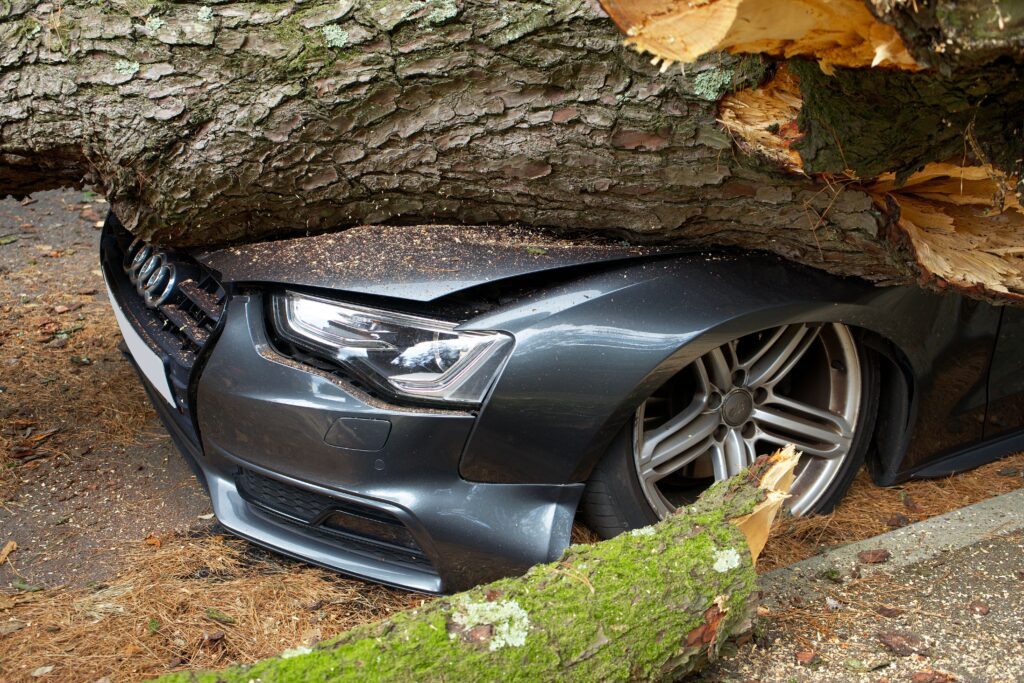
Fallen tree branches, branches broken by Florida’s frequent severe thunderstorms, create sudden debris fields that appear without warning after storms pass through.
Understanding what type of debris caused your damage affects who may be liable and which insurance coverage responds.
Which Insurance Coverage Pays for Road Debris Damage
Comprehensive coverage — your primary protection:
Comprehensive coverage handles damage from road debris — objects that strike your vehicle from outside rather than collisions with other vehicles. A piece of truck tire that strikes your undercarriage, lumber that falls from a construction vehicle and hits your hood, or a rock kicked up by another vehicle that cracks your windshield are all comprehensive claims.
Florida’s zero deductible windshield law applies specifically to windshield damage — if a piece of road debris cracks your windshield your insurer must repair or replace it at zero cost to you regardless of your deductible.
Collision coverage — when you hit debris on the road:
When you drive over road debris rather than being struck by it — running over a piece of truck tire or a fallen tree branch — the damage may be classified as a collision claim rather than comprehensive. The distinction matters because collision and comprehensive deductibles may differ and the claims classification affects how the incident appears on your record.
The line between comprehensive and collision for road debris isn’t always clear and different insurers sometimes classify similar incidents differently. If you have a debris incident discuss the classification with your insurer — sometimes the same incident can be processed under either coverage depending on the specific circumstances.
The zero-deductible windshield benefit:
Worth emphasizing again because it’s so consistently underused. If any road debris — a rock, a piece of tire, a small object kicked up by traffic — cracks or chips your windshield in Florida and you have comprehensive coverage your insurer pays the full repair or replacement cost. Nothing out of your pocket. Ever. This benefit applies unlimited times and does not affect your rates.
When Another Driver May Be Liable for Road Debris Damage
Florida law requires drivers to properly secure loads on their vehicles. When debris falls from an improperly secured load and damages your vehicle the driver of that vehicle may bear liability for the damage their negligence caused.
This is legally and practically different from a rock that was already on the road being kicked up by traffic — which is generally considered a road hazard for which no driver is liable.
When you can pursue the debris source vehicle:
If you witness debris falling from a specific vehicle, get the vehicle’s license plate number, description, and any other identifying information. This documentation is the foundation of any liability claim against the responsible driver.
File a police report immediately. The report creates official documentation of the incident and establishes the connection between the debris and the source vehicle while the information is fresh.
Contact your insurer and report the incident with all available information about the responsible vehicle. Your insurer may pursue subrogation against the responsible driver’s insurance — recovering what they paid on your behalf and potentially refunding your deductible.
The practical reality:
In most road debris situations the source vehicle is not identified. The debris was already on the road, the responsible vehicle is long gone, or the incident happened too quickly to gather identifying information. In these common scenarios your own comprehensive coverage is your only practical remedy.
The Tire Blowout Scenario — A Specific Road Debris Situation
Tire damage from road debris deserves specific discussion because it’s among the most common and most financially significant road debris incidents Florida drivers experience.
When road debris causes a tire blowout or puncture the tire replacement cost itself is generally not covered by auto insurance — tires are considered wear items and tire damage alone without associated vehicle damage typically falls outside standard auto coverage.
However when a tire blowout from road debris causes secondary damage — a blowout that causes you to lose control and strike a barrier, or a blown tire that damages your wheel, suspension, or undercarriage — that associated damage may be covered under comprehensive or collision depending on the specific circumstances.
Roadside assistance coverage — available as an add-on to most Florida auto policies — covers the cost of a tire change or tow when a blowout leaves you stranded. This is separate from coverage for the damage itself but is worth carrying for Florida highway driving where tire debris incidents are genuinely common.
What to Do Immediately After a Road Debris Incident
Move to safety first:
Road debris incidents often happen at highway speeds. If your vehicle is drivable move it completely off the travel lanes to a shoulder or exit before stopping to assess damage. A stopped vehicle in a travel lane creates serious additional accident risk.
Activate hazard lights immediately:
Alert following traffic to your presence as quickly as possible — particularly important on high-speed Florida highways where following vehicles may have limited time to react.
Document everything while at the scene:
Photograph all vehicle damage from multiple angles. Photograph the debris itself if it’s safe to approach and document. Note the exact location — highway, mile marker, direction of travel. Note any vehicles you observed that may have been the debris source. Note the time and any weather or traffic conditions relevant to the incident.
Call the Florida Highway Patrol or local law enforcement:
For incidents involving significant damage or potential liability a police report creates official documentation. For minor incidents a report may not be required but is still valuable if you later discover more significant damage.
Contact your insurer the same day:
Report the incident honestly and completely. Describe whether the debris struck your vehicle from the air or whether you drove over it — this distinction helps your insurer classify the claim correctly between comprehensive and collision.
Get a professional inspection before driving significant distances:
Road debris can cause damage that isn’t immediately apparent — suspension components, steering components, and undercarriage damage sometimes only become apparent when the vehicle is on a lift. For any significant debris impact have a mechanic inspect the vehicle before driving it extensively.
Frequently Asked Questions About Road Debris and Florida Car Insurance
Q: A rock cracked my windshield on the highway. Is this covered?
Yes — if you have comprehensive coverage. Florida law requires insurers to waive the deductible for windshield repair or replacement. Your windshield is repaired or replaced at zero cost to you. This is one of Florida’s most valuable and most underused insurance benefits.
Q: I ran over a piece of truck tire and it damaged my car. Which coverage applies?
Damage from driving over road debris may be classified as collision rather than comprehensive — depending on the specific circumstances and your insurer’s classification. Discuss the incident with your insurer to understand how it will be classified and which deductible applies.
Q: Can I find out who is responsible for road debris that damaged my car?
If you witnessed debris falling from a specific vehicle and have identifying information you can pursue a liability claim against that driver. In most cases the debris source is unidentified and your own comprehensive coverage is your practical remedy.
Q: Will a road debris comprehensive claim raise my Florida insurance rates?
Most Florida insurers do not surcharge for comprehensive claims including road debris damage. Comprehensive claims are weather and road events outside your control — most insurers treat them more favorably than at-fault collision claims. Confirm with your specific insurer.
Q: My tire was destroyed by road debris. Does insurance cover a new tire?
Tire replacement alone — without associated vehicle damage — is generally not covered by standard auto insurance. Tires are considered wear items. If the blowout caused secondary damage to your vehicle that associated damage may be covered. Roadside assistance coverage handles the cost of a tire change or tow when a blowout leaves you stranded.
Conclusion — Prepared Drivers Navigate Road Debris Better
Florida’s highways will always have road debris. The commercial truck traffic, the construction activity, the severe weather — these conditions aren’t going away and the debris they produce creates genuine ongoing risk for Florida drivers.
The drivers who navigate road debris incidents most effectively are the ones who understand their coverage before an incident occurs — who know that comprehensive handles most debris damage, that Florida’s windshield benefit makes cracked windshields free to fix, and that moving to safety and documenting thoroughly are the most important immediate actions.
And the drivers who are least financially exposed to road debris incidents are the ones who carry comprehensive coverage — particularly before June 1 when the hurricane season moratorium eliminates the ability to add it after a storm is named.
Visit EverQuote.com to compare Florida car insurance quotes and make sure your comprehensive coverage is in place for whatever Florida’s roads send your way.
Disclosure: This article contains affiliate links. We may earn a commission if you click and purchase through our links at no extra cost to you.