Florida Car Insurance and Named Storms: What Every Driver Must Know Before Hurricane Season
The National Hurricane Center issues the announcement on a Tuesday morning in late August. Tropical Storm Helene has formed in the Gulf of Mexico. Projected track: Northwest Florida. Estimated landfall: 72 hours.
Within hours of that announcement thousands of Florida drivers will reach for their phones to call their insurance companies. They will ask the same question. Can I add comprehensive coverage right now?
And they will receive the same answer. No.
This single word — delivered after a storm is already named and threatening — represents one of the most financially consequential insurance moments in Florida. Understanding exactly why it happens, what it means for your coverage, and what you must do before it happens is genuinely important knowledge for every Florida driver.
What a Named Storm Moratorium Actually Means
The moment a tropical system is classified as a tropical storm or hurricane and receives a name from the National Hurricane Center Florida insurance companies implement what is called a coverage moratorium.
During a moratorium insurers cannot bind new comprehensive coverage. Existing policies cannot be amended to add comprehensive. Drivers who call to increase their coverage after a storm is named are told — politely but absolutely — that it is too late.
This is not insurance company cruelty. It is the fundamental principle of insurance — you cannot insure against a loss that is already certain or imminent. Allowing drivers to add comprehensive coverage after a storm is named would be equivalent to allowing someone to buy flood insurance while their house is actively flooding. The system’s financial integrity — which ultimately protects all policyholders — depends on this rule being absolute.
The moratorium typically lifts after the storm has passed and the threat has ended. But by then the damage has already occurred.
The June 1 Deadline — Why It Matters More Than Most Drivers Realize
Florida’s hurricane season officially runs from June 1 through November 30. The June 1 date is not symbolic — it is the practical deadline for insurance decisions because storms can form and be named at any point after that date.
In practice storms sometimes develop before June 1 — and in active seasons named storms have formed as early as May. The coverage moratorium applies regardless of whether a storm forms before or after the official season start.
For Florida drivers the practical implication is clear. The decision about comprehensive coverage must be made before any storm forms and is named. Not when you see a storm developing on the weather radar. Not when your neighbor mentions something on the news. Before the season begins.
Every year some Florida drivers make this decision incorrectly. They see the storm developing. They check their coverage. They discover they don’t have comprehensive. They call their insurer. They hear no.
This scenario is entirely preventable. Verify your comprehensive coverage before June 1 every year. Add it if you don’t have it. Then if a storm threatens you have the protection you need already in place.
What Comprehensive Coverage Actually Pays After a Named Storm
Understanding exactly what comprehensive coverage pays — and what it doesn’t — helps Florida drivers set accurate expectations for hurricane season claims.
Wind damage:
Damage from hurricane-force winds — broken windows, dented panels, debris impact, and structural damage caused by wind — is covered under comprehensive. The zero-deductible windshield benefit applies to windshield damage from flying debris — Florida law requires insurers to waive the deductible for windshield repair or replacement regardless of cause.
Flooding and storm surge:
Damage from rising water — storm surge, flooding from hurricane rainfall, and water intrusion — is covered under comprehensive. This is an important distinction from homeowners insurance where flood coverage is typically a separate policy. For vehicles comprehensive handles flood damage.
Falling trees and debris:
Trees that fall on your vehicle during a hurricane are covered under comprehensive. Flying debris that damages your vehicle during the storm is covered. Comprehensive handles the broad category of storm-related damage that doesn’t involve collision with another vehicle.
What comprehensive doesn’t cover:
Damage that occurred before your comprehensive coverage was in force. Mechanical breakdown unrelated to the storm. Personal property inside the vehicle — electronics, clothing, and other belongings damaged by flooding are covered by homeowners or renters insurance rather than auto insurance.
Total Loss After a Hurricane — Understanding the Settlement
When a hurricane produces damage that exceeds a certain percentage of your vehicle’s actual cash value your insurer declares it a total loss. Understanding how this settlement works helps you navigate the process effectively.
Your insurer pays the vehicle’s actual cash value at the time of the loss — what it was worth on the market before the hurricane damage occurred. This is calculated using comparable vehicle sales data, condition adjustments, mileage, and local market factors.
After major hurricanes the used vehicle market in affected areas can shift — increased demand for replacement vehicles sometimes elevates ACV calculations slightly in the weeks following a storm. If your total loss settlement seems low request the detailed basis for the calculation and compare against current market listings for similar vehicles.
Gap insurance matters enormously in hurricane total loss situations. If you owe more on your vehicle than the ACV settlement — common for recently purchased or financed vehicles — gap coverage pays the difference. Without gap insurance you continue paying a loan on a vehicle that no longer exists.
The Moratorium’s Effect on Coverage Changes Beyond Adding Comprehensive
The named storm moratorium affects more than just adding comprehensive coverage. Once a storm is named Florida insurers typically cannot process any coverage changes — including increasing existing limits, adding vehicles to policies, or making other coverage modifications.
This means the time to review all your coverage — not just comprehensive — is before storm season begins. Reviewing your policy in May rather than August gives you the opportunity to address any coverage gaps before the season’s first named storm eliminates your ability to make changes.
What to Do When a Named Storm Threatens Your Area
Once a storm is named and your coverage situation is fixed by whatever decisions you made before the season the focus shifts entirely to practical vehicle protection.
Move your vehicle to safety early — before the crowds:
Parking garages and covered structures fill quickly when storms approach. Moving your vehicle 48 to 72 hours before projected landfall gives you the best options. A vehicle parked in a covered structure above projected storm surge elevation faces dramatically lower damage risk than one parked on the street or in a low-lying area.
Never drive through flooded roads:
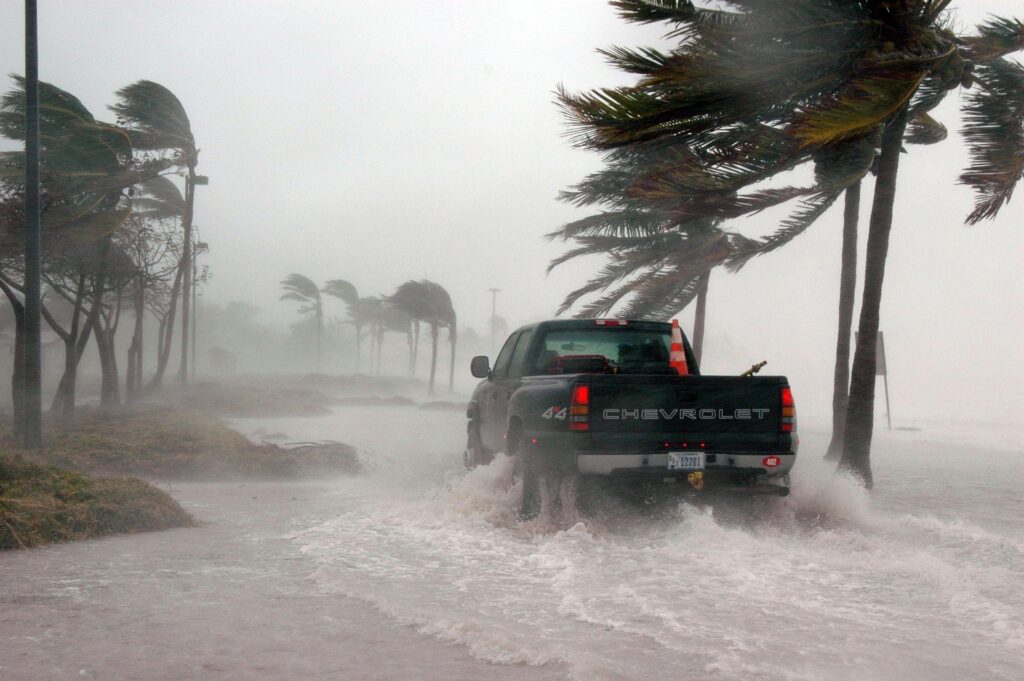
Six inches of moving water can knock a person off their feet. One to two feet can float most vehicles. Attempting to drive through flooded roads after a hurricane can total your vehicle in minutes and endanger your life. No destination is worth this risk.
Do not attempt to start a flooded vehicle:
If your vehicle floods do not attempt to start it before professional assessment. Starting a flood-damaged vehicle forces water through the engine and electrical systems causing catastrophic additional damage that significantly complicates your insurance claim.
Document your vehicle before the storm:
Pre-storm photos of your vehicle’s condition — every panel, every angle — establish the baseline against which storm damage is assessed. Store these photos in cloud storage so they’re accessible even if your phone is lost or damaged during the storm.
Document all damage after the storm before anything is moved or cleaned:
Post-storm photos of all damage from every angle, surrounding conditions showing storm evidence, and any flooding waterline marks all support your claim. File promptly — after major hurricanes claims volumes are enormous and earlier filers typically receive faster processing.
Frequently Asked Questions About Named Storms and Florida Car Insurance
Q: Can I add comprehensive coverage after a hurricane warning is issued?
No. Once a tropical storm or hurricane is named insurance companies implement a coverage moratorium. New comprehensive coverage cannot be purchased and existing policies cannot be amended. Add comprehensive before June 1 every year — after a storm is named it is already too late.
Q: My vehicle was flooded in a hurricane. Is this covered?
Yes — if you have comprehensive coverage. Flood damage from hurricane storm surge and rainfall is covered under comprehensive. Florida’s mandatory minimum coverage provides zero flood protection.
Q: Will filing a hurricane damage claim raise my insurance rates?
Most Florida insurers do not surcharge for comprehensive claims including hurricane damage. Hurricane damage is a weather event outside your control — most insurers treat it more favorably than at-fault collision claims. Confirm with your specific insurer before assuming.
Q: I evacuated and my vehicle was damaged by the storm while I was gone. Am I still covered?
Yes. Comprehensive coverage applies regardless of whether you were present. Your physical location during the storm doesn’t affect your coverage.
Q: My neighbor’s tree fell on my car during the hurricane. Does my insurance or theirs pay?
Your comprehensive coverage is the practical immediate remedy. Your neighbor’s homeowners liability insurance may have some relevance but pursuing this is legally complex and slow. File with your own comprehensive coverage — your insurer may pursue subrogation against your neighbor’s homeowners policy if appropriate.
Conclusion — The Decision That Cannot Wait Until August
Florida’s hurricane season is not a theoretical risk that affects other people in other years. It is an annual reality that has damaged or destroyed millions of Florida vehicles and that will continue to do so.
The drivers who recover quickly and completely after hurricane damage are the ones who made one simple decision before June 1 — they verified their comprehensive coverage was active and added it if it wasn’t.
The drivers who don’t recover — who face uninsured total losses and discover too late that the coverage they assumed they had wasn’t there — are the ones who waited until a storm was named to check.
Don’t be the driver who calls their insurer after the storm is named. Be the driver who made the right decision in May when the Gulf was calm and the season hadn’t started yet.
Check your comprehensive coverage today. Add it if you don’t have it. And enter hurricane season knowing that whatever the Atlantic produces this year your vehicle is genuinely protected.
Visit EverQuote.com to compare Florida car insurance quotes and make sure your comprehensive coverage is in place before Florida’s hurricane season begins.
Disclosure: This article contains affiliate links. We may earn a commission if you click and purchase through our links at no extra cost to you.