Florida Car Insurance and the Hurricane Season Checklist: Everything You Must Do Before June 1
There is a date on the Florida calendar that insurance professionals circle every single year — and most Florida drivers never think about until it’s too late.
June 1.
Not because anything dramatic happens on June 1. The Atlantic doesn’t suddenly become more dangerous. Storms don’t appear overnight. What happens on June 1 is purely administrative — and it is the administrative reality that makes this date the most important insurance deadline in Florida.
On June 1 hurricane season officially begins. And the moment a tropical storm or hurricane is named and threatening Florida — which can happen any time after June 1 and sometimes before it — insurance companies implement a coverage moratorium. New comprehensive policies cannot be bound. Existing policies cannot be amended to add comprehensive coverage. The window closes.
Every year some Florida drivers watch a storm develop in the Gulf and reach for their phone to call their insurance company. Every year those drivers discover the same thing. It’s too late.
This guide is the complete hurricane season insurance checklist — everything Florida drivers must verify, add, and confirm before June 1 arrives. Not after the first named storm. Not when the forecast tracks toward your county. Before June 1.
Why the June 1 Deadline Is Absolute
Understanding why insurers implement coverage moratoria helps Florida drivers appreciate why the pre-June deadline is non-negotiable rather than arbitrary.
Insurance is built on the principle of insuring against uncertain future events — not events that are already happening or imminent. When a hurricane is named and tracking toward Florida the probability of vehicle damage in affected areas rises from statistical possibility to near certainty for some locations. Allowing new comprehensive coverage to be purchased at this point would be allowing homeowners to buy fire insurance while their house is burning.
The moratorium protects the insurance system’s financial integrity — which ultimately protects all policyholders. An insurer that allowed last-minute comprehensive purchases before every named storm would face catastrophic concentrated losses that would threaten their ability to pay any claims.
For Florida drivers this means the decision about comprehensive coverage must be made in the calm before the season — not in the anxiety of an approaching storm.
The Complete Pre-Hurricane Season Insurance Checklist
Item 1 — Verify comprehensive coverage is active on every vehicle you own.
This is the single most important item on the checklist and the one most frequently overlooked by Florida drivers who dropped comprehensive coverage to reduce their premium and then forgot they did so.
Locate your current insurance declarations page — the document that summarizes your coverage. Look specifically for comprehensive coverage listed among your coverages. If it appears with a deductible amount you have it. If it doesn’t appear you don’t — and you need to add it before the season begins.
Call your insurer if you’re uncertain. Ask specifically: “Does my current policy include comprehensive coverage on [your vehicle]?” Get a clear yes or no. Don’t assume.
Item 2 — Confirm your comprehensive deductible.
Having comprehensive coverage and having adequate comprehensive coverage are different things. Your comprehensive deductible is the amount you pay out of pocket before insurance covers the rest in any comprehensive claim — including hurricane damage.
Common comprehensive deductibles in Florida are $500, $1,000, and $2,000. A higher deductible produces a lower premium but means more out of pocket if your vehicle is damaged in a hurricane.
Review your deductible with your current financial situation in mind. If a $2,000 deductible would create genuine hardship after a hurricane consider whether reducing it before the season is worth the premium adjustment.
Item 3 — Utilize Florida’s zero-deductible windshield benefit.
Florida law requires insurance companies to waive the deductible for windshield repair or replacement for policyholders with comprehensive coverage. This means that windshield damage from hurricane debris — flying objects, tree branches, hail — is repaired or replaced at zero cost to you.
This benefit is available year-round but hurricanes produce windshield damage at dramatically higher rates than routine driving. Make sure you know your insurer’s windshield claim process before a storm — not during one.
Item 4 — Document your vehicle’s pre-season condition.
Before hurricane season begins photograph your vehicle thoroughly — every panel, every angle, interior and exterior. Date-stamp these photos or ensure your phone’s metadata records the date automatically.
This pre-season documentation serves two purposes. It establishes your vehicle’s condition before the hurricane season begins — supporting any post-storm damage claim by clearly showing what damage existed before the storm and what the storm caused. And it captures the vehicle’s condition when it was at its best — before months of Florida summer driving potentially add minor wear.
Store these photos in cloud storage so they’re accessible even if your phone is lost or damaged during a storm.
Item 5 — Know your insurer’s claims process before you need it.
After a major hurricane Florida insurers receive thousands of claims simultaneously. The drivers who navigate this process most effectively are the ones who know the process before they need it — not the ones who are learning it while managing storm damage.
Find your insurer’s 24-hour claims number and save it in your phone under a label like “Insurance Claims Emergency.” Locate your policy number and save it somewhere accessible outside your vehicle — in your phone, in a cloud document, with a family member.
Understand your insurer’s preferred claims process — do they want you to call, use an app, or file online? Some insurers have specific post-hurricane procedures that differ from their standard claims process.
Item 6 — Review your rental reimbursement coverage.
If your vehicle is damaged in a hurricane and requires repair or is declared a total loss you need transportation while the claim is processed. If you have rental reimbursement coverage on your policy your insurer covers rental costs up to your policy’s daily and total limits.
Review your rental reimbursement coverage before hurricane season. Understand the daily maximum — often $30 to $50 per day — and the total maximum number of days covered. After major hurricanes rental vehicles in Florida become scarce quickly — knowing your coverage limits helps you make informed decisions about securing a rental promptly.
If you don’t have rental reimbursement coverage adding it before hurricane season costs $5 to $15 per month and is worth considering for any Florida driver without an alternative vehicle.
Item 7 — Understand gap insurance if your vehicle is financed.
If your vehicle is financed and is declared a total loss after a hurricane your comprehensive coverage pays the vehicle’s actual cash value — what it’s worth on the market at the time of the loss. If you owe more on your loan than the vehicle’s ACV the difference is your personal financial responsibility without gap insurance.
Florida’s hurricane risk makes this gap insurance consideration particularly relevant. A major hurricane that damages thousands of vehicles simultaneously creates scenarios where many vehicle owners discover the gap between their insurance settlement and their loan balance at the worst possible time.
If you have a financed vehicle and don’t have gap insurance review this before hurricane season.
Item 8 — Plan where you’ll park your vehicle during a storm.
Insurance knowledge is only useful if you also take practical steps to protect your vehicle when storms approach. The most effective protection is parking your vehicle in an enclosed structure — a garage, a covered parking facility, a multi-story parking structure above projected storm surge levels — when a hurricane threatens your area.
Know before hurricane season where you will park your vehicle if a storm approaches. Identify the closest parking garage to your home. Understand your condo or apartment complex’s hurricane parking procedures if applicable. Have a plan that you can execute quickly when a storm develops — because storms sometimes develop quickly.
What to Do When a Hurricane Threatens Florida
Once a storm is named and tracking toward Florida your insurance options are largely fixed by whatever decisions you made before June 1. What you can still control is your vehicle protection strategy.
Move your vehicle to safety early. Don’t wait until evacuation orders are issued or until the storm is 24 hours away. Parking facilities fill quickly when storms approach. Moving your vehicle to a garage or covered structure 48 to 72 hours before projected landfall ensures you have options.
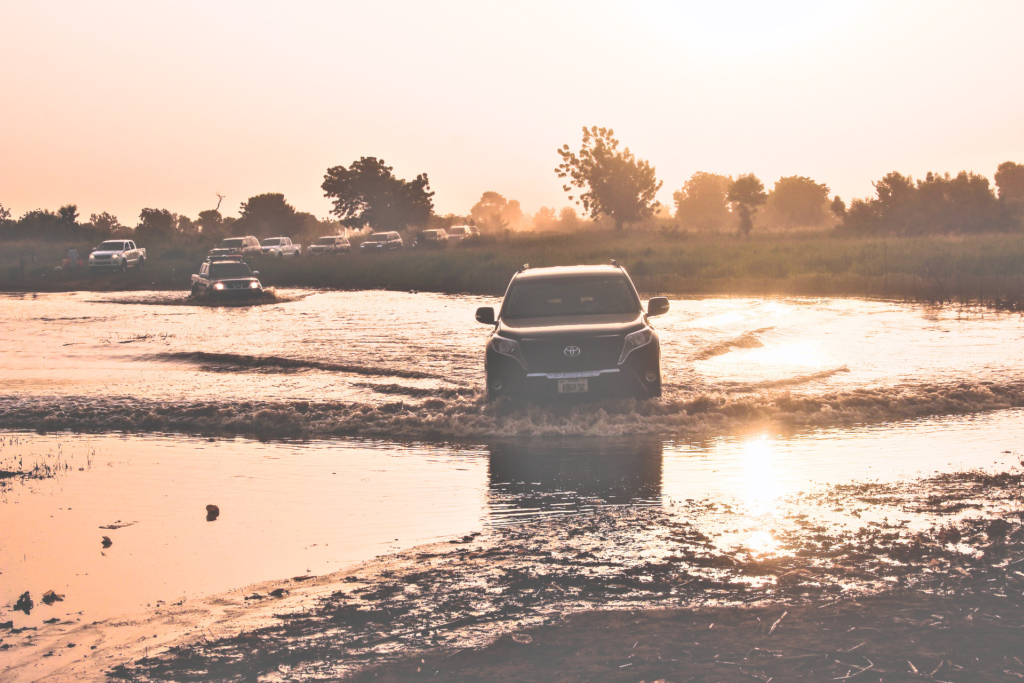
Never drive through flooded roads. This instruction appears in every hurricane guide for good reason — and it’s violated by Florida drivers every single storm. Just six inches of moving water can knock a person off their feet. One to two feet of water can float and carry away most vehicles. Attempting to drive through flooded roads can total your vehicle in minutes and endanger your life. The financial and physical consequences of this decision are both severe.
Do not attempt to start a flooded vehicle. If your vehicle is flooded do not attempt to start it before professional assessment. Attempting to start a flood-damaged vehicle can cause catastrophic additional mechanical damage that significantly complicates your insurance claim.
Document storm damage immediately and thoroughly. After the storm passes and it’s safe to assess your vehicle photograph every angle of the damage before anything is moved or cleaned. If the surrounding area shows storm conditions photograph that as well — establishing the storm as the cause of damage is important for your claim.
File your claim promptly. After major hurricanes Florida insurers receive enormous claim volumes. Filing promptly gets you into the queue earlier — which can meaningfully affect how quickly your vehicle is assessed, repaired, or settled.
Frequently Asked Questions About Hurricane Season and Florida Car Insurance
Q: Can I add comprehensive coverage after a hurricane warning is issued?
No. Once a tropical storm or hurricane is named and threatening Florida insurance companies implement a coverage moratorium. New comprehensive coverage cannot be purchased and existing policies cannot be amended to add comprehensive coverage until the storm has passed and the moratorium is lifted. Add comprehensive coverage before June 1.
Q: My vehicle was flooded by a hurricane. Does insurance cover this?
Yes — if you have comprehensive coverage. Flood damage from hurricane storm surge, rainfall, or rising water is covered under comprehensive coverage. Florida’s required minimum coverage — PIP and property damage liability — provides zero flood protection.
Q: Will filing a hurricane damage claim raise my insurance rates?
Most Florida insurers do not surcharge premiums for comprehensive claims including hurricane damage. Comprehensive claims are weather events outside your control and most insurers treat them more favorably than at-fault collision claims. Verify with your specific insurer before assuming.
Q: My neighbor’s tree fell on my car during a hurricane. Who pays?
Your comprehensive coverage handles this — it’s the practical and efficient path. Your neighbor’s homeowners liability insurance may also have some relevance but pursuing this is legally complex. Your comprehensive claim is the immediate solution and your insurer may pursue subrogation against your neighbor’s homeowners insurer if appropriate.
Q: I evacuated and left my car behind. It was damaged in the storm. Am I covered?
Yes — if you have comprehensive coverage. Comprehensive covers hurricane damage whether you were present or evacuated. Your physical location during the storm doesn’t affect your coverage.
Conclusion — June 1 Is Not a Suggestion
Florida’s hurricane season is not a theoretical risk that might affect someone else. It is an annual reality that has damaged or destroyed millions of Florida vehicles over decades — and it will continue to do so.
The drivers who recover quickly and completely after hurricane damage are the ones who verified their comprehensive coverage before June 1, documented their vehicle’s pre-season condition, knew their insurer’s claims process, and had a vehicle protection plan ready to execute when a storm developed.
The drivers who don’t recover — who face uninsured total losses, unexpected deductibles, and coverage gaps discovered too late — are the ones who assumed they were covered without checking, or who tried to add coverage after a storm was named.
June 1 is not a suggestion. It is the deadline that determines whether your car insurance actually protects you when Florida’s most predictable annual catastrophe arrives.
Check your coverage today. Add what’s missing. And enter hurricane season knowing that whatever the Atlantic produces this year your vehicle is genuinely protected.
Visit EverQuote.com to compare Florida car insurance quotes and make sure your comprehensive coverage is in place before Florida’s hurricane season begins — because after the first named storm it’s already too late.
Disclosure: This article contains affiliate links. We may earn a commission if you click and purchase through our links at no extra cost to you.