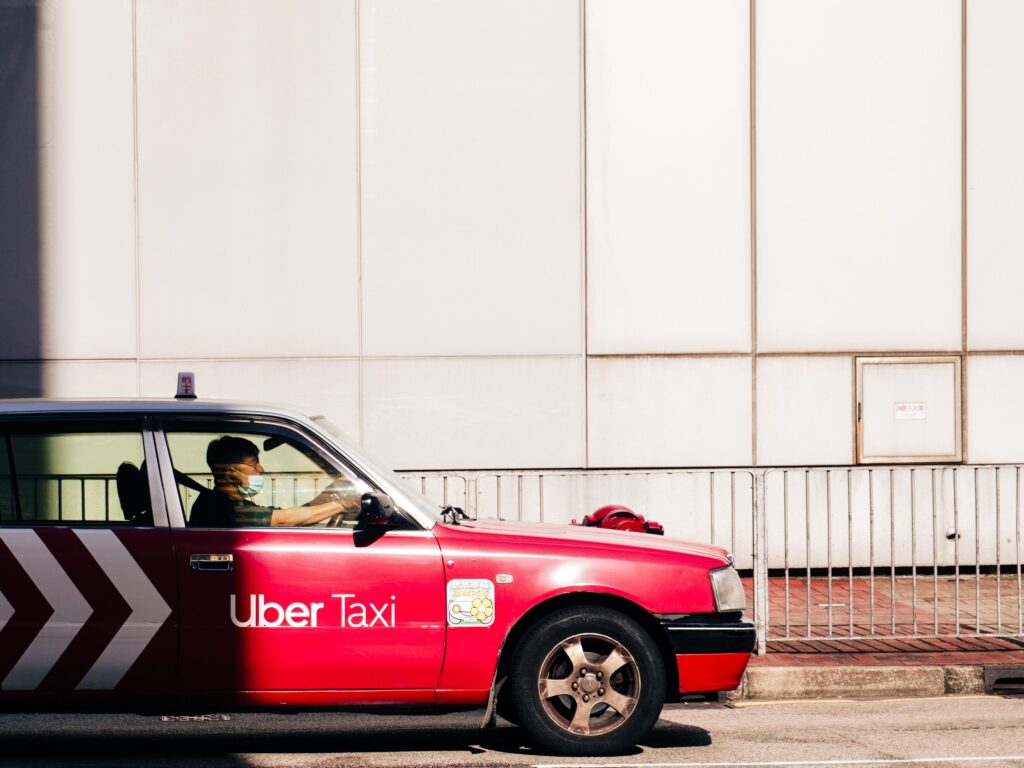
Florida Car Insurance and the Gig Economy: What Every Uber, Lyft, DoorDash, and Instacart Worker Needs to Know
Somewhere between the promise of flexible income and the reality of gig work, there is a coverage gap that nobody told you about when you signed up.
You downloaded the app. You completed the background check. You watched the onboarding videos. And at no point in that process did anyone sit you down and clearly explain that the moment you activate that app in your car, your personal auto insurance policy stops covering you — and the platform’s insurance may not fully protect you either.
This is the insurance reality of gig economy driving in Florida, and it affects hundreds of thousands of Florida workers who drive for Uber, Lyft, DoorDash, Instacart, Amazon Flex, and dozens of other platforms. Understanding exactly where you’re covered, where the gaps are, and what you can do about them isn’t optional information — it’s essential protection for anyone whose income depends on their vehicle.
The Fundamental Problem — Personal Insurance and Commercial Use
When you bought your personal auto insurance policy, you described how you use your vehicle. Commuting to work. Running errands. Weekend trips. Personal use. Your insurer priced your policy based on that description.
The moment you start using your vehicle to earn money — delivering food, transporting passengers, picking up groceries for pay — you’ve changed the fundamental nature of how you’re using that vehicle. You’ve moved from personal use to commercial use. And your personal auto insurance policy, in almost every case, contains language specifically excluding coverage for commercial use of your vehicle.
This exclusion isn’t a technicality buried in fine print that insurers use to wriggle out of legitimate claims. It’s a fundamental underwriting distinction. Commercial driving creates different, generally higher, risk exposure than personal driving. More miles. More time on the road. More pressure to complete trips quickly. Higher frequency of interaction with traffic in unfamiliar areas. Insurers price commercial coverage differently — and higher — because the risk profile is genuinely different.
When you drive for a gig platform using only your personal insurance, you are creating a coverage gap that exists every moment the app is active. Understanding exactly where that gap exists — and what the platforms provide to fill it — is the starting point for protecting yourself properly.
The Three Phases — Where You’re Covered and Where You’re Not
Every gig driving platform operates with a similar insurance structure that creates three distinct phases of coverage. Understanding these phases is essential because your coverage situation changes dramatically depending on which phase you’re in at any given moment.
Phase 1 — App On, No Active Job
You’ve activated the app and you’re available — waiting for a ride request or delivery order to come through. You’re driving around, positioned in a good area, hoping for activity.
This is the most dangerous coverage phase for gig workers. Your personal insurance doesn’t cover you because the app is active and you’re in commercial mode. The platform’s coverage during this phase is minimal — typically only liability coverage at limits significantly below what Florida injury attorneys routinely pursue in serious accident cases.
For rideshare drivers, Uber and Lyft typically provide $50,000 per person and $100,000 per accident in bodily injury liability, plus $25,000 in property damage liability during Phase 1. For delivery drivers, platform coverage during this waiting phase is often even more limited.
If you cause a serious accident during Phase 1 — injuring another driver significantly — the gap between the platform’s Phase 1 coverage and the actual damages could fall on you personally.
Phase 2 — Accepted a Job, En Route
You’ve accepted a ride or delivery request and you’re driving to pick up the passenger or the food order. You haven’t completed the pickup yet but you have an active commitment.
Platform coverage improves significantly during Phase 2. Uber and Lyft both provide $1,000,000 in liability coverage during this phase. DoorDash and similar delivery platforms provide more limited coverage — typically third-party liability coverage that varies by platform and situation.
Phase 3 — Active Trip or Delivery in Progress
For rideshare drivers, a passenger is in your vehicle. For delivery drivers, you have the order and are en route to the customer. This is the phase with the most robust platform coverage.
Uber and Lyft maintain $1,000,000 in liability coverage during Phase 3. They also provide contingent comprehensive and collision coverage — meaning if you have collision and comprehensive on your personal policy, they extend similar protection to your vehicle during an active trip.
| Phase | What You’re Doing | Personal Insurance | Platform Coverage |
|---|---|---|---|
| App Off | Personal driving | ✅ Full coverage | ❌ None |
| Phase 1 — App on, waiting | Available, no job | ❌ Excluded | ⚠️ Minimal liability only |
| Phase 2 — Job accepted, en route | Driving to pickup | ❌ Excluded | ✅ Better coverage |
| Phase 3 — Active trip/delivery | Passenger/order in vehicle | ❌ Excluded | ✅ Best coverage |
The Solution — Rideshare and Delivery Endorsements
The insurance industry has responded to the growth of gig economy driving with specific products designed to fill the coverage gaps that platform insurance leaves — particularly during Phase 1.
A rideshare endorsement or transportation network company endorsement added to your existing personal auto policy extends your personal coverage to include periods when the app is active but you don’t yet have an active job. This directly addresses the most dangerous coverage gap — Phase 1 — by bridging the gap between your personal coverage and the platform’s coverage.
Most major Florida insurance companies now offer rideshare or delivery endorsements. Progressive, State Farm, Geico, Allstate, and others all have products in this category. The cost is typically $10 to $40 per month added to your existing premium — modest compared to the coverage gap it fills.
For delivery drivers specifically, some insurers offer commercial delivery endorsements rather than rideshare-specific endorsements. The key question to ask your insurer is: does this endorsement cover me during all phases of my gig driving including when the app is active but I have no active delivery?
Telling Your Insurance Company — Why You Must
Many Florida gig workers are tempted to simply not mention their delivery or rideshare driving to their personal insurer. The reasoning is understandable — they don’t want a premium increase, they’re only doing gig work part-time, and the platforms provide some coverage anyway.
This reasoning, however logical it feels, creates serious risk.
Insurance is built on accurate disclosure of how you use your insured vehicle. Using your vehicle for commercial gig work without disclosing it to your insurer is considered material misrepresentation — the intentional or negligent provision of inaccurate information that affects how your risk is priced.
If you have an accident during gig work and your insurer discovers you were driving commercially without disclosing it, they can deny your claim and potentially cancel your policy entirely. The platform’s coverage during Phase 1 may be your only protection — and it may be insufficient for a serious accident.
The practical approach is to call your insurer, disclose your gig driving, and ask about available endorsements. The conversation takes ten minutes. The protection it creates is genuine and lasting.
Florida-Specific Considerations for Gig Drivers
Florida’s particular insurance environment creates some considerations for gig drivers that are more significant here than in many other states.
Florida’s high uninsured driver rate — approximately one in five Florida drivers carries no insurance — is a genuine hazard for gig drivers who spend more time on the road than average. More road time means more statistical exposure to uninsured motorist accidents. Carrying adequate uninsured motorist coverage is important for any Florida driver but is particularly practical for gig workers.
Florida’s no-fault PIP system applies to gig drivers just as it does to all Florida drivers. If you’re injured in an accident during gig work, your own PIP coverage pays your initial medical expenses up to $10,000 regardless of fault. The 14-day rule applies — you must seek medical treatment within 14 days of an accident to preserve your PIP benefits.
Florida’s hurricane season creates specific risks for gig drivers during storm events. Driving for a platform during a hurricane warning or tropical storm creates elevated accident risk, potential vehicle damage from weather, and complex insurance questions about whether platform coverage applies during declared weather emergencies. Avoiding gig driving during active weather events is both a safety and an insurance consideration.
Tax Implications That Affect Your Insurance Decisions
Gig workers who drive for income are self-employed for tax purposes, and the business use of your vehicle has tax implications that interact with your insurance decisions.
The cost of a rideshare or delivery endorsement on your insurance policy is a legitimate business expense that may be deductible on your taxes as a self-employed gig worker. Mileage driven for gig work is also potentially deductible. Consulting with a tax professional about how to properly document and deduct vehicle expenses as a gig worker is worthwhile if you drive professionally with any regularity.
The tax deductibility of gig-related insurance costs partially offsets the additional premium. A $30 per month rideshare endorsement costs $360 per year before tax. If you’re in a 22 percent tax bracket and this expense is fully deductible, the after-tax cost is closer to $281 annually. The protection it provides costs less than it appears.
What to Do If You Have an Accident During Gig Work
Knowing exactly what steps to take after an accident during gig work reduces stress and protects your claim.
Note which phase you were in at the time of the accident. Was the app active? Did you have an accepted job? Was a passenger or delivery in your vehicle? This information determines which coverage responds and what information you need to provide to insurers.
Contact both your personal insurer and the platform’s insurance support line. Both parties need to know about the accident promptly. Report honestly — including that you were engaged in gig work at the time.
Document everything thoroughly. Photos, witness information, police report number, and any relevant app information showing your status at the time of the accident all support your claim.
Seek medical attention promptly if you’re injured. Florida’s 14-day PIP rule applies regardless of what you were doing when the accident occurred.
Frequently Asked Questions About Gig Driver Insurance in Florida
Q: Does Uber or Lyft insurance cover me between rides?
During Phase 1 — when the app is active but you have no accepted ride — Uber and Lyft provide only minimal liability coverage. Your personal insurance excludes commercial use. This gap is best addressed by adding a rideshare endorsement to your personal policy.
Q: Do I need special insurance to deliver for DoorDash or Uber Eats?
Your personal insurance excludes commercial delivery use. DoorDash and Uber Eats provide some coverage during active deliveries but limited coverage when you’re available but haven’t accepted an order. A delivery or rideshare endorsement on your personal policy fills these gaps.
Q: How much does a rideshare endorsement cost in Florida?
Rideshare and delivery endorsements typically add $10 to $40 per month to your existing personal auto insurance premium in Florida. The exact cost depends on your insurer, your vehicle, and your driving record.
Q: What if I only do gig driving occasionally?
Occasional gig driving creates the same coverage gaps as regular gig driving. The app doesn’t know — and your insurance coverage doesn’t distinguish — between a driver who does this daily and one who does it twice a month. If the app is active and you cause an accident, the coverage gap exists regardless of frequency.
Q: Can my insurer cancel my policy if they find out I’ve been doing gig work without disclosing it?
Yes. Material misrepresentation — including failing to disclose commercial use of your vehicle — can give your insurer grounds to cancel your policy or deny claims. Disclosure and a proper endorsement is always the better path.
Conclusion — Protect Your Income by Protecting Your Coverage
Your vehicle is the tool that makes your gig income possible. An accident that damages your vehicle, results in a denied insurance claim, or exposes you to personal liability can eliminate that income source entirely — temporarily or permanently.
The gap between personal auto insurance and gig driving coverage is real, documented, and addressable. A rideshare or delivery endorsement costs less per month than most Florida drivers spend on a single tank of gas. The protection it provides is comprehensive and genuine.
If you drive for any gig platform in Florida — even occasionally — call your insurer today. Disclose your gig driving. Ask about available endorsements. And make sure the tool that generates your income is properly protected.
Visit EverQuote.com to compare Florida car insurance quotes that include rideshare and delivery endorsements and find the most competitive coverage for Florida gig economy drivers today.
Disclosure: This article contains affiliate links. We may earn a commission if you click and purchase through our links at no extra cost to you.