Florida drivers can spend years paying for car insurance without realizing that one of the biggest weather risks to their vehicle may not be covered by the insurance they are legally required to carry.
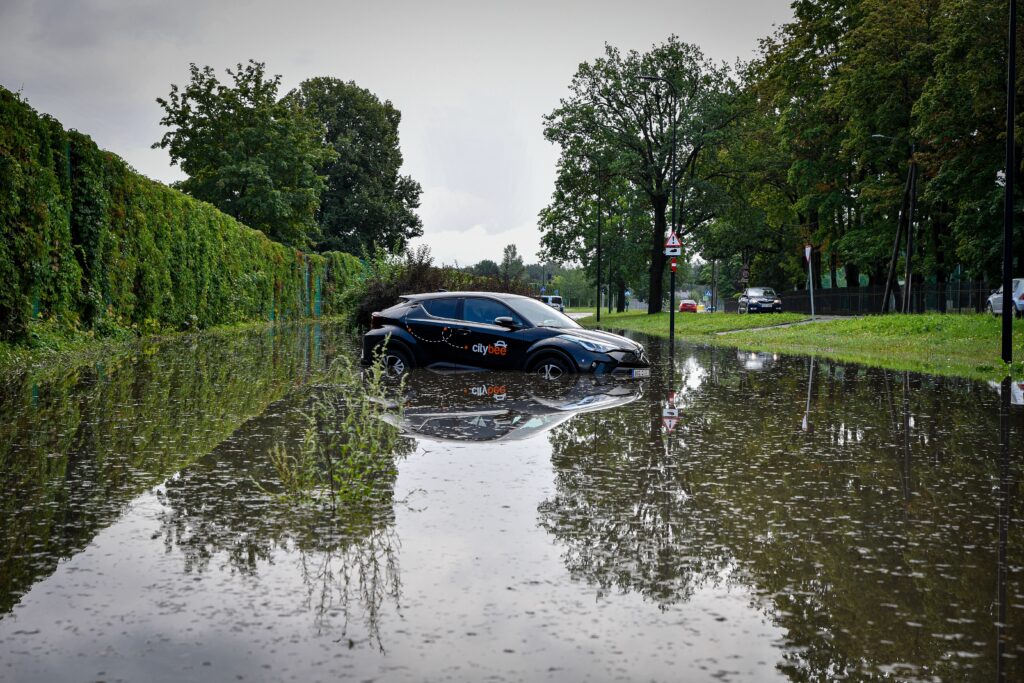
Imagine waking up after a hurricane to find your car sitting in several inches of floodwater.
Or walking outside after a severe storm and discovering that a tree branch has crushed the roof.
Maybe your vehicle wasn’t flooded at all, but storm debris damaged the body while it was parked.
The first question is obvious:
Will my car insurance pay for this?
The answer depends much less on whether the damage happened during a hurricane and much more on which coverage you purchased before the storm arrived.
For many Florida drivers, the coverage that matters most in these situations is comprehensive coverage.
Understanding that distinction before hurricane warnings begin can potentially make the difference between having an insurance claim and facing a very expensive repair or vehicle replacement on your own.
Does Car Insurance Cover Hurricane Damage in Florida?
Car insurance can cover hurricane-related vehicle damage when the policy includes the appropriate coverage.
According to the Florida Department of Financial Services, comprehensive — sometimes called “other than collision” — coverage pays for vehicle damage caused by events other than a collision, including windstorm and flood.
It can also cover losses involving fire, theft, vandalism, falling objects, and hitting an animal, subject to the terms of the policy.
That makes comprehensive coverage particularly relevant during Florida’s hurricane season.
For example, comprehensive coverage may come into play when:
- Floodwater damages your parked vehicle.
- Hurricane winds cause an object to strike your car.
- A tree or large branch falls on the vehicle.
- Hail damages the body of the car.
- A storm-related fire damages the vehicle.
- Other covered non-collision storm damage occurs.
But having “car insurance” does not automatically mean you have comprehensive coverage.
That distinction is extremely important.
Florida’s Required Auto Insurance Is Not the Same as Hurricane Protection for Your Car
Florida drivers should not assume that because their vehicle is legally insured, the vehicle itself is protected against hurricane or flood damage.
Florida generally requires qualifying registered vehicle owners to maintain Personal Injury Protection (PIP) and Property Damage Liability (PDL), subject to applicable state requirements.
Those coverages perform different jobs from comprehensive coverage.
PIP primarily deals with covered injuries and related losses under Florida’s no-fault system.
Property Damage Liability addresses your legal liability for damage you cause to someone else’s property, subject to policy terms and limits.
Neither should be confused with comprehensive coverage protecting your own vehicle against a covered flood or windstorm loss.
That means a driver can satisfy Florida’s basic insurance requirements and still discover after a hurricane that storm damage to their own vehicle is not covered.
The Florida Hurricane Scenario Many Drivers Overlook
Consider this example.
A Florida driver owns a car worth $18,000.
To reduce the monthly insurance bill, the driver carries the insurance required for the vehicle but has decided not to purchase comprehensive coverage.
A hurricane approaches.
The driver parks the vehicle outside the home. Heavy rainfall and storm surge flood the neighborhood, and water enters the vehicle.
The engine, electronics, interior, and other components suffer extensive damage.
The driver files an insurance claim expecting the vehicle to be covered because the damage resulted from a declared hurricane.
But a hurricane declaration does not create comprehensive coverage that wasn’t already on the policy.
If there is no applicable coverage for the vehicle’s flood damage, the driver could face the loss personally.
Now consider the same situation with a driver who had comprehensive coverage in force before the loss.
That driver may have a covered comprehensive claim, subject to the policy’s deductible, exclusions, valuation provisions, and other terms.
The difference isn’t the hurricane.
The difference is the coverage that existed when the loss occurred.
Does Comprehensive Insurance Cover a Flooded Car?
Comprehensive coverage generally addresses flood damage to an insured vehicle, subject to the specific policy.
This is particularly important in Florida because vehicle flooding can occur from more than one source.
Heavy rain can overwhelm drainage systems.
Canals and waterways can rise.
Storm surge can push saltwater into streets and parking areas.
Even areas that don’t normally appear vulnerable can experience serious water accumulation during extreme weather.
If your vehicle is caught in rising water, don’t assume that the damage is minor simply because the exterior looks normal afterward.
Modern vehicles contain extensive electrical and electronic systems, sensors, computers, wiring, and safety equipment.
Water intrusion can therefore create problems beyond visible upholstery damage.
What If a Tree Falls on Your Car During a Hurricane?
This is another classic comprehensive-coverage situation.
Suppose your car is parked in your driveway during a storm and high winds bring down a large tree branch.
You weren’t driving.
You didn’t collide with another vehicle.
Yet your car has substantial damage.
Comprehensive coverage is generally the portion of an auto policy designed to address covered losses involving falling objects and windstorm damage.
Your deductible and policy terms would still matter.
What If Flying Debris Hits Your Vehicle?
Florida hurricanes and severe thunderstorms can turn loose objects into damaging debris.
Roofing materials, branches, signs, outdoor furniture, and other objects can strike parked vehicles.
If wind-blown debris damages your vehicle, comprehensive coverage may apply, depending on the circumstances and your policy.
However, there is an important distinction if the event involves an actual collision while driving.
Insurance claims are determined by what happened, not simply by the fact that a hurricane was occurring at the time.
If you’re unsure whether a loss falls under comprehensive or collision coverage, report the circumstances accurately to your insurer and allow the claim to be evaluated under your policy.
Comprehensive vs. Collision: What’s the Difference During a Storm?
These two coverages are often confused.
Situation | Coverage that may apply
Floodwater damages parked car | Comprehensive
Tree falls on vehicle | Comprehensive
Wind-blown object damages car | Comprehensive
Hail damages vehicle | Comprehensive
Driver crashes into another vehicle | Collision
Driver loses control and hits an object | Collision
Vehicle is stolen during storm evacuation | Comprehensive may apply
Storm causes a covered fire loss | Comprehensive may apply
These are general examples. The actual coverage determination depends on the facts of the loss and the insurance contract.
What About a Hurricane Deductible?
Florida homeowners are familiar with hurricane deductibles, but don’t automatically apply homeowners-insurance concepts to your automobile policy.
For auto comprehensive claims, look at the comprehensive deductible shown on your auto policy.
For example, suppose your comprehensive deductible is $500 and your vehicle suffers a covered loss.
The deductible is generally the amount applied before the insurer’s covered payment, subject to the policy and the value of the loss.
This is one reason drivers should know their deductible before hurricane season rather than discovering it while filing a claim.
There is also an important Florida exception involving windshields.
Florida law provides that when an applicable motor-vehicle policy provides comprehensive or combined additional coverage, the policy’s deductible provisions do not apply to damage to the windshield of a covered motor vehicle.
That windshield rule should not be interpreted as eliminating the comprehensive deductible for every other type of hurricane damage to your car.
What Happens If Flood Damage Totals the Vehicle?
Flood damage can be severe enough that repairing the vehicle is no longer economically reasonable under the insurer’s claim evaluation.
If a covered vehicle is determined to be a total loss, the amount payable will depend on the policy and the vehicle’s value.
The Florida Department of Financial Services provides consumer guidance regarding total-loss claims and vehicle valuation.
Policy terms and the applicable coverage determine how an individual claim is handled.
This creates another issue drivers sometimes overlook:
What if you owe more on the auto loan than the vehicle’s insurance value?
Flooded Car + Auto Loan: The Gap Problem
Suppose you owe $27,000 on your car loan.
After a hurricane, the vehicle suffers a covered total loss.
If the covered insurance settlement is less than your remaining loan balance, comprehensive coverage itself doesn’t necessarily erase the remaining debt.
This is where separate GAP coverage may become relevant.
GAP coverage is designed to address certain differences between an insured vehicle’s value and the amount remaining on a qualifying loan or lease, subject to its own terms and limitations.
Drivers financing newer vehicles should understand whether they have GAP protection and where it comes from.
It might be included through an insurer, lender, lease arrangement, or separate product.
Don’t assume you have it simply because the vehicle is financed.
Can You Add Comprehensive Coverage Right Before a Hurricane?
This is an important reason not to wait until a hurricane is approaching to review your policy.
Insurers may restrict new coverage or certain policy changes when a major storm threatens an area.
Even when a change is permitted, coverage does not retroactively protect damage that already happened.
Insurance is designed to cover uncertain future losses — not a loss that has already occurred.
The practical lesson is simple:
Review your coverage while the weather is calm.
Don’t wait until your neighborhood is under an evacuation order or your car is already sitting in rising water.
What Should You Do Before a Florida Hurricane?
Insurance is only one part of protecting a vehicle.
If authorities issue storm warnings for your area, prioritize personal safety and follow official emergency instructions.
When it can be done safely, vehicle owners can also take practical steps before severe weather arrives.
Check Your Insurance Policy
Look specifically for:
- Comprehensive coverage
- Comprehensive deductible
- Collision coverage
- Rental reimbursement
- GAP coverage, if applicable
- Roadside assistance or towing coverage
Knowing that you have “full coverage” isn’t enough.
“Full coverage” is an informal expression, not a single standardized insurance policy.
Read the actual coverages listed on your declarations page.
Photograph Your Vehicle
Take clear photos or video showing your vehicle’s condition before a major storm.
Capture:
- Front
- Rear
- Both sides
- Windshield
- Interior
- Wheels
- Existing damage
Store the images somewhere you can access even if your phone is damaged or lost.
Keep Insurance Information Accessible
Have your insurer’s claim information and policy number available electronically.
You don’t want your only copy sitting inside a flooded vehicle.
Move the Vehicle When It Is Safe and Practical
If your area is vulnerable to flooding and you have adequate warning, moving the vehicle to safer, higher ground may reduce the risk.
Never put yourself in danger simply to protect a car.
Follow local emergency-management instructions.
What Should You Do If Your Car Floods?
First, protect yourself.
Never enter dangerous floodwater simply to inspect your vehicle.
Once authorities say conditions are safe, document the damage.
Take photographs and video before cleaning or moving items when possible.
Then contact your insurer promptly.
Provide accurate information about:
- Where the vehicle was located
- When you discovered the damage
- How high the water appeared to reach
- Whether the vehicle was running at the time
- Any visible exterior or interior damage
Avoid making assumptions about whether the vehicle can safely be started.
Water can affect mechanical and electrical components, and attempting to start a flooded vehicle may potentially worsen damage.
Follow appropriate professional guidance.
Should You Immediately Repair the Car?
Report the claim and ask your insurer about the next steps before authorizing major repairs.
The insurer may need to inspect the vehicle or request documentation.
Emergency measures to prevent additional damage may be reasonable in some circumstances, but keep receipts and document what you do.
Don’t dispose of damaged parts or authorize extensive work without understanding how your claim will be handled.
What If Your Car Was Parked in a Garage That Flooded?
The location of the vehicle doesn’t automatically determine whether your auto insurer covers the vehicle.
If floodwater enters a garage and damages a vehicle carrying applicable comprehensive coverage, the auto policy may respond to the covered vehicle loss according to its terms.
Don’t assume your homeowners insurance automatically replaces the role of auto comprehensive coverage for the car itself.
Different insurance policies protect different property and risks.
What If You Drive Through Floodwater?
This situation can become more complicated.
The safest advice has nothing to do with insurance:
Do not drive through flooded roads.
Water depth can be difficult to judge, roads can be damaged underneath the water, and moving water can carry vehicles away.
From an insurance standpoint, report exactly what occurred.
Whether a particular loss is covered will depend on the circumstances, the policy language, and the insurer’s claim determination.
Do not intentionally take a dangerous risk because you assume insurance will pay afterward.
Does Rental Reimbursement Pay While Your Flooded Car Is Being Repaired?
Possibly — but only if you purchased applicable rental reimbursement coverage and the circumstances meet the policy requirements.
Rental reimbursement can provide replacement transportation up to applicable policy limits following a qualifying covered loss.
Rental reimbursement should not be confused with comprehensive coverage itself.
You may have comprehensive coverage without rental reimbursement.
Check both separately.
This can become especially important after a major Florida hurricane when repair shops and rental-car companies may be extremely busy.
Seven Questions to Ask Your Insurer Before the Next Storm
You don’t need to become an insurance expert.
Ask these questions:
- Do I currently have comprehensive coverage?
- What is my comprehensive deductible?
- Would my current policy cover flood and windstorm damage to my vehicle?
- Do I have collision coverage?
- Do I have rental reimbursement, and what are its limits?
- If my financed vehicle is totaled, do I have GAP protection?
- Are there any exclusions or limitations in my policy I should understand before hurricane season?
Write down the answers.
Five minutes reviewing these details now can prevent major surprises after a storm.
Frequently Asked Questions
Does Florida’s Minimum Car Insurance Cover Hurricane Damage to My Own Car?
Do not assume it does.
Florida’s basic required coverages serve different purposes from comprehensive coverage. Comprehensive is the coverage generally associated with covered flood, windstorm, falling-object, theft, and similar non-collision damage to your own vehicle.
Does Comprehensive Insurance Cover Hurricane Flooding?
The Florida Department of Financial Services identifies flood and windstorm among the types of vehicle damage covered by comprehensive or “other than collision” coverage. Individual claims remain subject to the insurance contract, deductible, exclusions, and circumstances.
Does Comprehensive Cover a Tree Falling on My Car?
Falling-object damage is generally among the losses associated with comprehensive coverage, subject to policy terms.
What If Hurricane Debris Breaks Only My Windshield?
Florida has a special windshield rule. For a covered motor vehicle with the comprehensive or combined additional coverage described in Florida Statute §627.7288, the policy deductible does not apply to windshield damage.
Will Comprehensive Insurance Pay Off My Entire Car Loan After a Total Loss?
Not necessarily. What you owe a lender and the amount payable for an insured total loss can be different. GAP coverage may be relevant when an eligible loan or lease balance exceeds the applicable insurance settlement.
Does Rental Reimbursement Automatically Come With Comprehensive Insurance?
No. Rental reimbursement is a separate coverage that should be checked on your policy.
Should I Wait for a Hurricane Warning Before Adding Comprehensive Coverage?
Waiting is risky.
Review your insurance before a storm threatens your area. Coverage cannot retroactively protect a loss that has already occurred, and insurers may restrict certain new coverage or policy changes as a major storm approaches.
A Simple Florida Hurricane Insurance Checklist
Before hurricane season or well before a storm approaches:
✓ Check whether your vehicle has comprehensive coverage.
✓ Know your comprehensive deductible.
✓ Check collision coverage separately.
✓ Check whether you have rental reimbursement.
✓ Review GAP protection if your vehicle is financed or leased.
✓ Photograph the vehicle.
✓ Save your policy and insurer’s claim information somewhere accessible.
✓ Follow official evacuation and emergency instructions.
After vehicle damage:
✓ Put personal safety first.
✓ Photograph and video the damage when safe.
✓ Contact your insurer promptly.
✓ Keep receipts and claim records.
✓ Ask before authorizing major repairs.
✓ Do not assume a badly flooded vehicle is safe to start or drive.
The Bottom Line
A hurricane doesn’t automatically determine whether your damaged car is insured.
Your coverage does.
For Florida drivers, comprehensive coverage can be particularly important because it addresses covered non-collision losses such as flood, windstorm, falling objects, fire, theft, and vandalism.
The biggest mistake is assuming that Florida’s required auto insurance automatically protects your own vehicle against those losses.
Check your declarations page before severe weather threatens.
Know whether you have comprehensive coverage.
Know your deductible.
Know whether you have rental reimbursement.
And if your car is financed, understand whether you have GAP protection.
The best time to discover a gap in your insurance is before the water starts rising — not afterward.
Compare Florida Car Insurance Options
If reviewing your policy reveals that you don’t have the coverage you expected — or you’re paying more than you want for the coverage you need — comparing options can help you understand what’s available.
Compare Florida car insurance options with EverQuote and review coverage choices that may fit your situation.
Affiliate Disclosure
GuardedLifeInsurance.com may earn compensation if you click an affiliate link or complete an action through one of our partners. This does not increase the price you pay. We may receive compensation from companies mentioned on this website.
Official Sources
Florida Department of Financial Services — Personal Automobile Insurance Overview
Florida Legislature — Florida Statutes, Chapter 324: Financial Responsibility
Florida Legislature — Florida Statute §627.7288: Comprehensive Coverage; Deductible Not to Apply to Motor Vehicle Glass
Important Disclaimer
GuardedLifeInsurance.com provides general educational and informational content only. We are not a licensed insurance agency, insurance company, attorney, or financial adviser. This article is not insurance, legal, or financial advice.
Coverage, deductibles, exclusions, claim decisions, vehicle valuations, premiums, and policy terms vary by insurer and individual policy. Florida insurance laws and regulations can change. Review your policy documents and confirm coverage directly with your insurer or a licensed insurance professional.