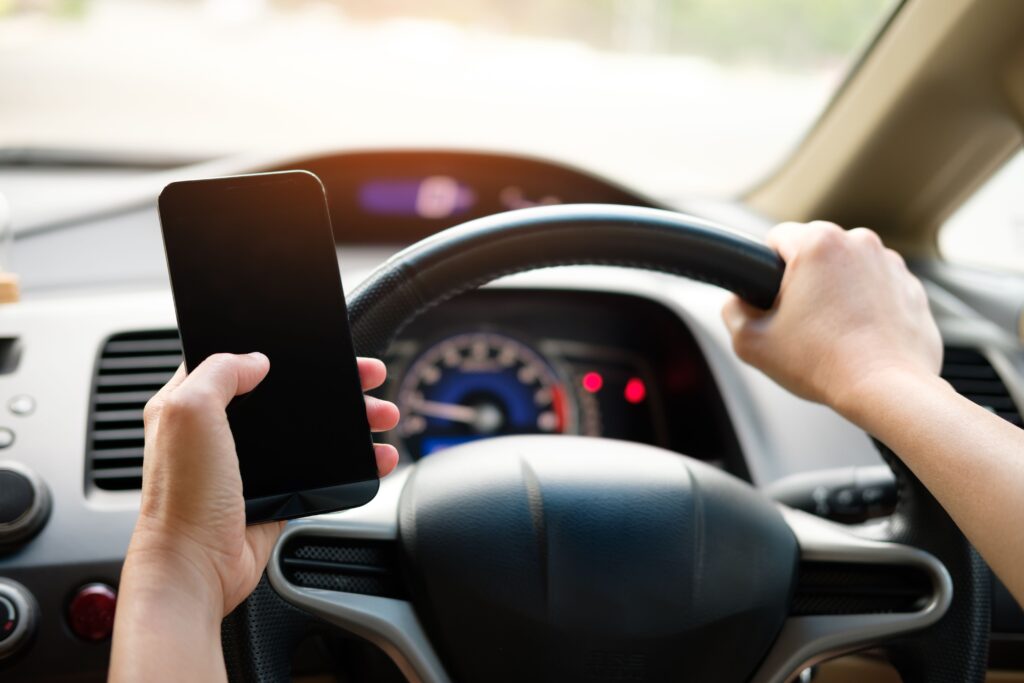
Florida Car Insurance and Texting While Driving: What Every Driver Needs to Know About the Real Costs
There is a moment that happens to almost every Florida driver eventually. You’re at a red light on US-1. Your phone buzzes. You think — it’s just a quick look. Just a second.
In Florida that second has a specific price tag. And most drivers dramatically underestimate what it actually costs.
This isn’t an abstract safety lecture. This is a specific financial guide to what distracted driving actually costs Florida drivers in fines, insurance surcharges, and legal liability — because understanding the real numbers changes how people think about that buzzing phone in a way that general warnings never quite manage.
What Florida Law Actually Requires
Florida’s Wireless Communications While Driving Law took full effect in 2020. The law prohibits manual use of any wireless device while operating a motor vehicle on public roads.
This means no typing. No texting. No scrolling. No holding your phone while driving. The prohibition applies at red lights and stop signs as well as while moving — stopping your vehicle doesn’t create a legal window for phone use.
The law has two tiers that affect insurance differently.
First offense: A non-moving violation. Fine of approximately $30 plus court costs bringing the total to approximately $100. No points added to your license. Generally not reported to insurance companies. Your rates are not affected by a genuine first offense citation.
Second offense within five years: A moving violation. Fine of approximately $60 plus court costs. Three points added to your Florida driver’s license. Reported to your insurance company at renewal.
School zone and active work zone violations carry enhanced penalties and point additions regardless of whether it’s a first or subsequent offense.
The Real Financial Cost Most Drivers Never Calculate
Most Florida drivers who receive a distracted driving citation think about the fine. The fine is genuinely the smallest part of the total cost.
Here is the complete three-year financial picture of a second-offense texting while driving citation in Florida.
Fine and court costs: approximately $160.
Insurance surcharge: three points trigger a premium increase at renewal. Most Florida insurers apply a surcharge of 10 to 20 percent for a three-point moving violation lasting three years from the conviction date.
On a Florida policy costing $2,400 per year a 15 percent surcharge adds $360 per year — $1,080 over three years.
Total three-year cost of one second-offense texting citation: approximately $1,240.
That is the real price of looking at your phone at a red light in Florida. Not $160. $1,240.
The Traffic School Solution — Why Most Drivers Should Use It
Florida allows drivers to elect traffic school for eligible moving violations — including second-offense texting citations — once every 12 months. Electing traffic school within 30 days of the citation date and completing an approved driver improvement course withholds the conviction from your driving record entirely.
No points. No insurance surcharge. No three-year financial consequence.
The course costs $15 to $30 online and takes approximately four hours.
The math is straightforward. A $30 course versus $1,080 in insurance surcharges over three years. Traffic school election is almost always the correct financial decision for any eligible texting citation.
The election must be made within 30 days of the citation — the deadline is printed on your ticket. Missing this deadline removes your best option. Act immediately when you receive a distracted driving citation.
What Happens When Texting While Driving Causes an Accident
A texting citation is an inconvenience. A texting-related accident is a different category of financial event entirely.
Fault is easily established:
Phone records subpoenaed in accident litigation show exactly when your phone was in use. Witness accounts, dashcam footage from other vehicles, and law enforcement investigation can all establish phone use at the time of impact. In Florida’s civil litigation environment clear evidence of distraction is the foundation of substantial damage claims against at-fault drivers.
Without Bodily Injury Liability coverage your personal assets are exposed:
Florida doesn’t require BIL. A distracted driver without BIL who causes serious injuries faces a civil lawsuit with no insurance protection. Medical bills, lost wages, pain and suffering — all pursued against personal assets directly.
The premium impact of an at-fault accident:
An at-fault accident caused by distracted driving raises your Florida premium 30 to 50 percent for three years — on top of any distracted driving citation surcharge if both arise from the same incident. The combined financial impact can be substantial.
Criminal exposure for serious accidents:
In Florida causing serious bodily injury or death through distracted driving can result in criminal charges — reckless driving at minimum, vehicular homicide in the most serious cases. Criminal consequences add legal costs, potential imprisonment, and permanent record implications to the financial and insurance consequences.
Building Habits That Protect Your Record and Your Rates
The practical changes that eliminate distracted driving exposure are genuinely simple. The challenge is not complexity — it’s building consistent habits that override the impulse to check a notification while driving.
Phone in Do Not Disturb mode before the car moves:
Both iPhone and Android have driving modes that silence notifications and send automatic replies to incoming messages. Activating this before you start the engine — not when you remember partway through your drive — eliminates the notification temptation entirely.
Navigation set before departure:
The most common reason Florida drivers interact with their phones while moving is adjusting navigation. Setting your destination before putting the car in gear eliminates this entirely. If you need to change your route pull over safely before touching your phone.
All calls through Bluetooth:
Hands-free calling through your vehicle’s Bluetooth system or a speaker is legal in Florida and keeps your eyes on the road and hands on the wheel. If your vehicle doesn’t have Bluetooth a $30 Bluetooth speaker sits on your dashboard and handles calls without requiring you to touch your phone.
The financial motivation:
Tell yourself specifically what a texting citation costs you — not abstractly but in the real numbers above. $1,240 over three years for a second offense. The concrete number is more motivating than a general awareness that distracted driving is expensive.
Frequently Asked Questions About Texting While Driving and Florida Car Insurance
Q: Will a first-offense texting citation affect my Florida insurance rates?
Generally no. A first offense is a non-moving violation that doesn’t add points to your license and is typically not reported to insurance companies. Your rates should not be affected by a genuine first offense in Florida.
Q: I received a second-offense texting citation. What should I do immediately?
Elect traffic school within 30 days of the citation date. Contact the clerk of court for your county to confirm eligibility and begin the election process. A $30 online course withholds the conviction from your record entirely — preventing both the license points and the insurance surcharge.
Q: The other driver was texting when they hit me. How does this affect my claim?
Evidence of the other driver’s phone use significantly strengthens your claim. Phone records, witness accounts, and dashcam footage can establish the distraction. For serious injuries a Florida personal injury attorney experienced in distracted driving cases can help ensure this evidence is properly developed.
Q: Can I use my phone at a red light in Florida?
No. Florida’s hands-free law applies at red lights and stop signs as well as while moving. The engine running on a public road triggers the prohibition regardless of whether the vehicle is moving.
Q: Does a texting citation from another state affect my Florida insurance?
Yes. Florida insurers check your complete driving record including out-of-state violations at renewal. Violations from other states that add points to your home state license are typically reported to and considered by Florida insurers.
Conclusion — The Notification Can Wait
The message that arrives while you’re driving will still be there when you park. The social media notification will still exist when you arrive. What won’t still be there — in the same form it exists right now — is the clean driving record that saves you hundreds of dollars annually and the financial stability that a serious distracted driving accident can permanently damage.
Florida’s roads ask a lot of drivers who are paying complete attention. Adding phone interaction to that demand produces accidents with financial consequences that follow drivers for years.
The phone can wait. The road cannot.
Visit EverQuote.com to compare Florida car insurance quotes and find the most competitive rates for Florida drivers who protect their records by keeping their attention where it belongs — on the road.
Disclosure: This article contains affiliate links. We may earn a commission if you click and purchase through our links at no extra cost to you.