Florida Car Insurance and Weather Damage: The Complete Guide to Hail, Wind, and Storm Claims
Florida weather is not subtle. Afternoon thunderstorms that materialize in minutes and drop golf ball-sized hail. Hurricane-force winds that arrive with days of warning but still catch drivers unprepared. Tornadoes that touch down with almost no notice. And flooding that can transform a dry road into an impassable river in less than an hour.
Florida drivers face more weather-related vehicle damage risk than drivers in almost any other state — and understanding exactly how your car insurance responds to every type of weather damage is practical knowledge that can mean the difference between a smooth claim and an expensive surprise.
The Coverage Foundation — Comprehensive Is Everything
Before discussing specific weather events it’s essential to establish the foundation that applies to all of them.
Weather damage to your vehicle is covered under comprehensive coverage — not collision, not liability, not PIP. Comprehensive coverage is the only type of auto insurance that protects your vehicle from weather events of any kind.
Florida’s required minimum coverage — $10,000 Personal Injury Protection and $10,000 Property Damage Liability — provides zero protection for weather damage to your own vehicle. These coverages protect other people from you. They don’t protect your vehicle from anything.
Comprehensive coverage is optional in Florida unless your vehicle is financed or leased. Many Florida drivers who own their vehicles outright have dropped comprehensive to reduce their premium — sometimes without fully understanding that they’ve eliminated their only protection against Florida’s most frequent and most damaging weather risks.
If you’re not certain whether your current Florida auto policy includes comprehensive coverage check your policy documents or call your insurer before the next storm season. This single question can save you thousands of dollars.
Hail Damage — More Common in Florida Than Most Drivers Realize
Florida experiences significant hail events regularly — particularly during severe thunderstorm season from spring through fall. The afternoon convective storms that develop rapidly over Florida can produce large hail with very little warning, and hail damage to vehicles can be extensive.
Comprehensive coverage pays for hail damage to your vehicle subject to your comprehensive deductible. Hail damage claims are among the most straightforward weather claims from a coverage standpoint — the damage is clearly weather-related, the cause is unambiguous, and comprehensive coverage responds without fault determination complications.
The practical considerations for hail claims involve the deductible calculation. If your comprehensive deductible is $500 and hail damage costs $800 to repair filing a claim saves you $300 but adds a claim to your history. For hail damage that modestly exceeds your deductible some Florida drivers choose to pay out of pocket — particularly if their insurer applies surcharges for comprehensive claims. Most Florida insurers don’t surcharge for comprehensive claims but verify with your specific insurer before deciding.
For significant hail damage — multiple panels damaged, windshield cracked, extensive denting — filing a claim is clearly the right choice. The repair costs are genuine and the coverage exists precisely for this scenario.
Wind Damage — Hurricane and Non-Hurricane
Wind damage to vehicles comes in two primary categories in Florida — hurricane-force wind and severe thunderstorm wind — and both are covered under comprehensive coverage.
Hurricane wind damage is covered under comprehensive regardless of the storm’s official classification. Wind that damages your vehicle — whether from a Category 1 hurricane, a tropical storm, or a severe thunderstorm — is a covered comprehensive event.
The critical rule that applies specifically to hurricane coverage is the moratorium on adding coverage once a storm is named. Insurance companies implement a coverage freeze when a tropical storm or hurricane is named and threatening Florida. If you don’t have comprehensive coverage before the storm is named you cannot add it in time for that storm. Verify your comprehensive coverage before June 1 every year — before hurricane season begins.
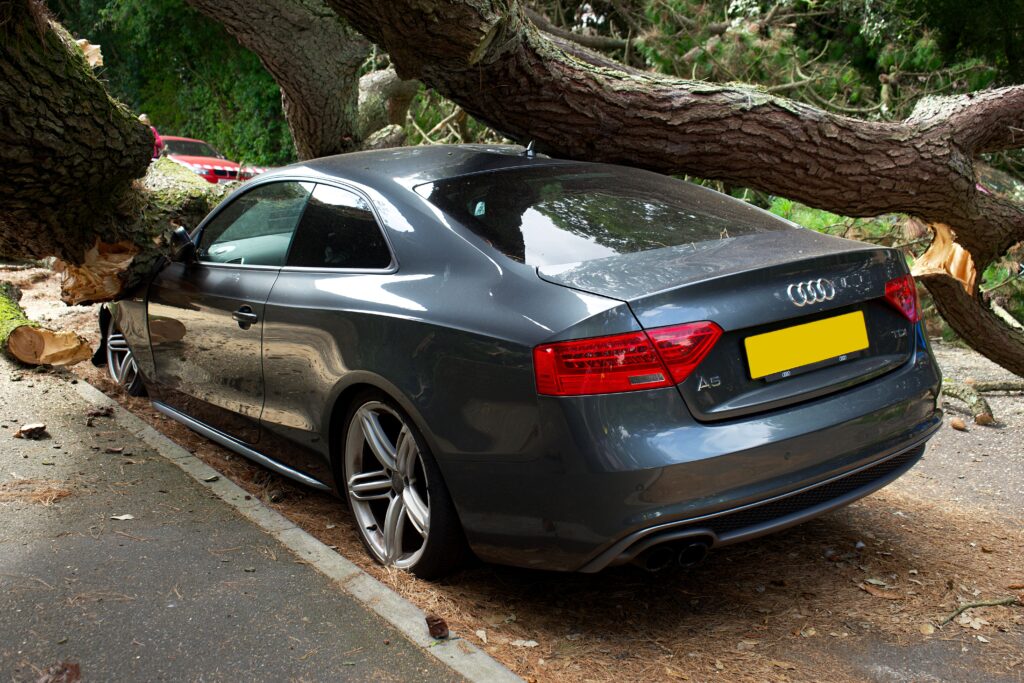
Damage from flying debris carried by wind — tree branches, signs, debris from other properties — is also covered under comprehensive. Your coverage doesn’t require that the wind directly struck your vehicle — debris propelled by wind and striking your vehicle is a comprehensive claim.
Flooding — The Most Financially Devastating Weather Event for Florida Vehicles
Flooding is the weather event that produces the most total vehicle losses in Florida — and the one where the gap between having comprehensive coverage and not having it is most financially devastating.
Comprehensive coverage pays for flood damage to your vehicle from all sources — storm surge from hurricanes, rising water from heavy rainfall, flooding from overflowing drainage systems, and any other source of flood water. The source of the flood doesn’t change the coverage as long as you have comprehensive on your policy.
A flood-totaled vehicle — one where the repair cost exceeds the vehicle’s actual cash value — produces a total loss settlement from your comprehensive insurer minus your deductible. The settlement is based on the vehicle’s actual cash value at the time of the flood accounting for depreciation. This is what the vehicle was worth on the market — not what you originally paid for it.
Flood damage to vehicles is particularly serious because water intrusion — especially saltwater from storm surge — can affect electrical systems, mechanical components, and structural elements in ways that aren’t fully apparent until days or weeks after the flooding. A vehicle that appears repairable after flood exposure sometimes reveals additional damage as components that were saturated with salt water begin to corrode and fail.
If your vehicle is flooded never attempt to start it before professional assessment. Attempting to start a flood-damaged vehicle can cause additional mechanical damage — damage that occurs after the flooding event and may complicate your claim.
Tornadoes — The Sudden Severe Event
Florida experiences more tornadoes than most people realize — the state ranks among the highest nationally for tornado frequency. Most Florida tornadoes are relatively brief and localized but they can cause severe vehicle damage in the areas they affect.
Tornado damage to vehicles is covered under comprehensive coverage. Wind damage, flying debris, and direct damage from the tornado itself are all comprehensive claims. The same moratorium rules that apply to hurricanes do not apply to tornadoes — tornadoes occur without the days of advance notice that hurricanes provide, making pre-storm coverage changes essentially impossible.
If your vehicle is in the path of a tornado your comprehensive coverage responds to whatever damage results. Document the damage thoroughly before any cleanup or repair begins.
Lightning Strikes and Fire
Direct lightning strikes to vehicles are covered under comprehensive coverage. A lightning strike can cause severe electrical damage, fire, and other damage to a vehicle’s systems. Comprehensive pays for repairs or total loss settlement minus your deductible.
Vehicle fires resulting from lightning strikes are also comprehensive claims. Vehicle fires from other causes — mechanical failures, electrical shorts — are typically also comprehensive claims when not related to a collision.
Florida’s Zero Deductible Windshield Benefit
Florida has a unique law that benefits insured drivers significantly and is worth knowing regardless of what other weather coverage you carry.
Florida Statute 627.7288 requires insurance companies to waive the deductible for windshield repair or replacement for Florida policyholders with comprehensive coverage. This means that weather damage to your windshield — hail chips, storm debris impact, anything that cracks or chips your windshield — must be repaired or replaced at zero cost to you if you have comprehensive coverage.
This zero deductible windshield benefit applies to all windshield claims — not just storm-related ones. A rock chip from highway driving, a crack from temperature changes, storm debris impact — all are repaired at no cost under Florida law if you have comprehensive coverage.
What to Do After Weather Damages Your Vehicle in Florida
The steps you take after weather damages your vehicle affect how smoothly your claim is processed and how quickly you recover.
Document the damage immediately and thoroughly before any cleanup or repair attempts. Photograph every angle of the damage, the general area showing the storm conditions, and any debris. This documentation establishes the weather event as the cause and supports your claim.
Report your claim to your insurer promptly. After major weather events Florida insurers receive large claim volumes. Filing promptly gets you into the queue earlier. After significant storms repair shops and rental cars can become scarce — early filing helps secure these resources.
Do not attempt to start a flood-damaged vehicle. As noted above attempting to start a flooded vehicle can cause additional damage that complicates your claim.
For hail damage specifically — get multiple repair estimates if possible. Paintless dent repair is often the most efficient repair method for hail damage and many Florida shops specialize in this technique after storm events.
Frequently Asked Questions About Weather Damage and Florida Car Insurance
Q: Does comprehensive coverage cover all types of weather damage in Florida?
Yes. Comprehensive coverage pays for damage from hail, wind, flooding, tornadoes, lightning, falling trees, and other weather events. It is the only auto insurance that covers weather damage to your vehicle.
Q: Can I add comprehensive coverage when a storm is approaching Florida?
No for named storms. Once a tropical storm or hurricane is named and threatening Florida insurance companies implement a moratorium on new comprehensive coverage. Add comprehensive before June 1 each year before hurricane season begins.
Q: Will filing a weather damage claim raise my Florida insurance rates?
Most Florida insurers do not surcharge premiums for comprehensive claims — including weather claims. Comprehensive claims are not-at-fault events and most insurers treat them more favorably than at-fault collision claims. Verify with your specific insurer before assuming.
Q: My windshield was cracked by storm debris. Do I pay my deductible?
No. Florida law requires insurers to waive the deductible for windshield repair or replacement for policyholders with comprehensive coverage. Your windshield is repaired or replaced at zero cost to you regardless of your comprehensive deductible.
Q: What if my vehicle was damaged by a neighbor’s tree that fell during a storm?
Your comprehensive coverage handles this — it’s the practical and efficient path. Your neighbor’s homeowners liability insurance may also have some relevance but pursuing this is complex and your comprehensive claim is the immediate solution. Your insurer may pursue subrogation against your neighbor’s homeowners insurer if appropriate.
Conclusion — Florida Weather Demands Florida Preparation
Florida’s weather is genuinely more severe and more varied than in most other states. The combination of hurricane season, frequent severe thunderstorms, hail events, tornadoes, and flooding creates a weather risk profile that makes comprehensive coverage more important for Florida vehicle owners than for drivers almost anywhere else in the country.
The preparation is simple — verify your comprehensive coverage is active before hurricane season begins each year. The protection it provides is comprehensive — hail, wind, flood, tornado, lightning, debris. And in Florida the question is not whether you will eventually face serious weather while owning a vehicle. The question is whether your coverage will be there when you do.
Visit EverQuote.com to compare Florida car insurance quotes and make sure your comprehensive coverage is in place before Florida’s next weather event arrives.
Disclosure: This article contains affiliate links. We may earn a commission if you click and purchase through our links at no extra cost to you.