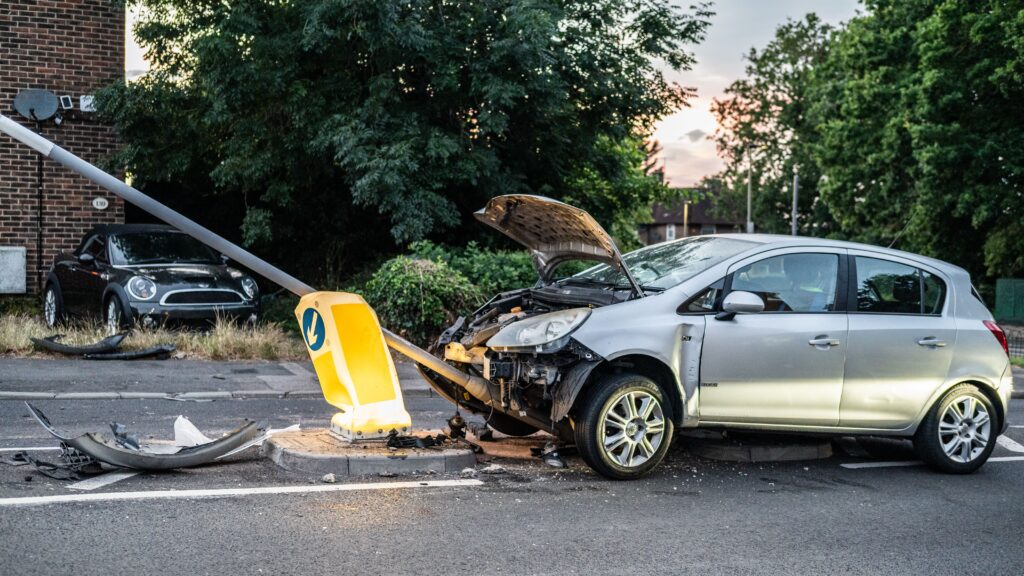
Florida Car Insurance and Road Rage: What Happens When Anger Leads to an Accident
Here is something that most Florida drivers never think about until it happens to them. Road rage incidents are more common in Florida than in most other states, and the insurance consequences of being involved in one — whether as the aggressor or the victim — are more complicated than a typical accident claim. Understanding how your car insurance responds to road rage incidents, and what your legal exposure is, could save you from a genuinely painful financial and legal situation.
Florida consistently ranks among the states with the highest rates of aggressive driving and road rage incidents. Heavy traffic in Miami, Orlando, Tampa, and other major metros, combined with Florida’s year-round driving season and the stress of navigating busy highways, creates an environment where tempers can flare. Knowing your rights and your insurance coverage before something happens is far better than trying to figure it out in the aftermath.
What Exactly Is Road Rage for Insurance Purposes?
Road rage and aggressive driving are related but legally distinct concepts, and the distinction matters significantly for insurance purposes.
Aggressive driving is typically defined as a traffic offense — behaviors like tailgating, excessive speeding, unsafe lane changes, and running red lights that endanger other drivers. Aggressive driving is generally treated as a traffic violation and handled through the standard traffic enforcement system.
Road rage crosses into criminal behavior. Florida law defines road rage as an assault or battery committed by the operator of a motor vehicle. When aggressive driving escalates to intentional acts — deliberately ramming another vehicle, using a weapon, physically assaulting another driver — it moves from a traffic matter into criminal territory. This distinction is critically important for insurance purposes.
Here is what I’ve noticed that surprises most Florida drivers when they first learn about it. Standard car insurance policies are designed to cover accidents — unintentional events. When an incident is classified as intentional rather than accidental, your insurance coverage may not apply in the way you expect.
How Insurance Responds to Road Rage Incidents
The insurance response to a road rage incident depends heavily on which role you played — aggressor or victim — and on how the incident is classified.
If you are the victim of road rage:
If another driver intentionally rams your vehicle, forces you off the road, or damages your car during a road rage incident, the situation is treated similarly to any other accident from your insurance perspective. Your collision coverage pays for damage to your vehicle subject to your deductible. If you are injured, your PIP coverage pays for medical expenses up to your policy limit. Your uninsured motorist coverage applies if the at-fault driver has no insurance, which is unfortunately common in road rage situations where the aggressor flees the scene.
The fact that the other driver acted intentionally rather than accidentally doesn’t change your ability to file a claim under your own coverage. Your insurance covers your losses from the event regardless of the other driver’s intent.
If you are the aggressor:
This is where the situation becomes significantly more complicated and potentially very serious. If you intentionally use your vehicle as a weapon — deliberately ramming another car, forcing someone off the road, or using your vehicle to threaten or harm another driver — your liability insurance may not cover the resulting damages.
Standard car insurance liability coverage is designed to cover negligent acts — accidents caused by careless or inattentive driving. Most policies specifically exclude intentional acts from liability coverage. If you deliberately cause damage or injury during a road rage incident, your insurer may deny liability coverage on the grounds that the act was intentional rather than accidental.
This means you could be personally responsible for the other driver’s vehicle damage, medical expenses, and other losses — with no insurance protection. In serious road rage incidents involving significant injuries, this personal exposure can be financially devastating.
The Criminal Consequences That Compound the Insurance Problem
Road rage incidents in Florida can result in criminal charges that create additional complications beyond the insurance issues.
Depending on the severity of the incident, road rage in Florida can be charged as aggravated assault with a deadly weapon — a vehicle — which is a felony offense carrying serious penalties including prison time. Lesser incidents may be charged as misdemeanor assault or battery. Any criminal conviction related to a road rage incident will appear on your driving record and be reported to insurance companies, resulting in significant premium increases or policy cancellation.
I’ve noticed that drivers who think they are just expressing frustration in a moment of anger often don’t consider that their vehicle becomes a deadly weapon in the eyes of Florida law the moment they use it to threaten or harm another driver. The legal consequences can be life-altering, and the insurance consequences compound that.
What to Do if You Are the Victim of Road Rage in Florida
If you find yourself targeted by an aggressive driver in Florida, the decisions you make in the moment significantly affect both your safety and your ability to file a successful insurance claim afterward.
Do not engage. This is the most important advice and it bears emphasis. Attempting to retaliate, confront, or match the aggressive behavior of another driver almost always makes the situation worse and can transform you from victim to participant in ways that complicate your insurance claim and legal position.
Create distance. If another driver is behaving aggressively toward you, your first priority is to create physical distance between your vehicle and theirs. Change lanes, take an exit, or pull into a public place with other people present. Do not pull over on an isolated road or highway shoulder.
Call 911. If you feel threatened or if the other driver’s behavior is endangering you, call 911 immediately. A police report of the incident creates an official record that is valuable for your insurance claim and any subsequent legal proceedings.
Document everything safely. If you can do so without creating additional danger, note the make, model, color, and license plate of the aggressive driver’s vehicle. Do not use your phone while driving to take photos or video — ask a passenger to do this if one is present, or wait until you are safely stopped.
Seek medical attention. Even if you don’t feel injured immediately, seek medical evaluation after any road rage incident involving physical contact with your vehicle. As with any Florida accident, you should see a doctor within 14 days to preserve your PIP coverage rights.
Contact your insurance company. Report the incident to your insurer as soon as possible. Provide them with the police report number, documentation of the incident, and any witness information you collected.
What to Do if You Feel Road Rage Coming On
This is genuinely important practical advice that most insurance guides skip over. The best way to avoid the insurance and legal consequences of road rage is to recognize the warning signs in yourself and take deliberate steps to de-escalate before your behavior crosses a line.
Florida’s traffic — particularly in Miami, Fort Lauderdale, Tampa, and Orlando — is genuinely stressful. Long commutes, aggressive drivers, construction, and heat all contribute to elevated frustration levels behind the wheel. Recognizing that stress is affecting your driving and taking active steps to manage it is both a safety strategy and a financial one.
If you feel your anger rising while driving, create physical space between yourself and the driver who is frustrating you. Let them pass. Take a different route. Play calming music. The few seconds of time you might save by tailgating or cutting someone off are never worth the potential consequences.
Remember that the financial consequences of a road rage incident where you are the aggressor — denied liability coverage, criminal charges, civil lawsuits — can be life-altering. No driving frustration is worth that outcome.
How Road Rage Affects Your Insurance Record
A road rage incident affects your insurance in several ways depending on how it unfolds.
If you are involved in an at-fault accident during a road rage incident — even if the intentional act claim is disputed — the accident itself will be reported to insurance companies and will affect your rates. At-fault accidents in Florida typically increase premiums by 30 to 50 percent for three years.
If criminal charges are filed and result in a conviction, the conviction appears on your driving record and is reported to insurance companies at your next renewal. Criminal driving convictions, particularly those involving assault with a vehicle, can result in policy cancellation or non-renewal by your current insurer and make it difficult to obtain standard market coverage.
If your liability insurer denies coverage for an intentional act and you are sued by the other driver, the resulting civil judgment against you is a personal liability that is not discharged by insurance and can affect your financial situation for years.
Uninsured Motorist Coverage and Road Rage Hit and Run Incidents
Road rage incidents frequently involve drivers who flee the scene after causing damage — either because they realize they have committed a crime or because they were never insured to begin with. This is where your uninsured motorist coverage becomes critically important.
If an aggressive driver damages your vehicle and flees without stopping, your collision coverage pays for vehicle repairs subject to your deductible. If you are injured and the other driver cannot be identified or has no insurance, your uninsured motorist coverage pays for medical expenses, lost wages, and pain and suffering that exceed your PIP limits.
Given Florida’s high rate of uninsured drivers and the frequency with which aggressive drivers flee the scene of incidents they cause, carrying adequate uninsured motorist coverage is particularly important for Florida drivers who regularly navigate high-traffic areas where road rage incidents are more likely.
Frequently Asked Questions About Road Rage and Car Insurance in Florida
Q: Does car insurance cover road rage incidents in Florida?
It depends on your role in the incident. If you are the victim, your own collision and uninsured motorist coverage applies in the same way it would for any accident. If you are the aggressor and your insurer classifies the incident as an intentional act, liability coverage may be denied, leaving you personally responsible for the other driver’s damages.
Q: What should I do immediately after a road rage incident in Florida?
Prioritize your safety first by creating distance from the aggressive driver. Call 911 if you feel threatened or if there has been physical contact. Document the incident including the other driver’s license plate if possible. Seek medical attention within 14 days if you experienced any physical contact or believe you may be injured. Contact your insurance company to report the incident.
Q: Can road rage result in criminal charges in Florida?
Yes. Road rage that involves using a vehicle to threaten or harm another driver can be charged as aggravated assault with a deadly weapon, which is a felony in Florida. Even lesser road rage incidents can result in misdemeanor charges. Criminal convictions from road rage incidents significantly affect car insurance rates and availability.
Q: Does my insurance cover me if I accidentally cause an accident while driving aggressively?
If the incident is classified as negligent rather than intentional — for example, if you were driving too fast in frustration and caused an accident without intentionally targeting another driver — your liability coverage should apply in the same way it would for any at-fault accident. The key distinction is between negligent behavior and deliberate, intentional acts.
Q: Will a road rage incident raise my insurance rates even if I wasn’t charged criminally?
If you are involved in an at-fault accident during a road rage incident, the accident itself will be reported to insurance companies regardless of whether criminal charges are filed. At-fault accidents in Florida typically increase premiums by 30 to 50 percent for three years.
Conclusion
Road rage incidents in Florida carry consequences that extend far beyond the moment of frustration that causes them. The insurance implications — potential denial of liability coverage for intentional acts, at-fault accident surcharges, and the impact of any criminal convictions on your insurability — can affect your financial situation for years.
The most practical advice is the simplest. Don’t engage with aggressive drivers. Create distance.
Call 911 if you feel threatened. And recognize that no traffic frustration is worth the insurance, legal, and financial consequences that a road rage incident can bring.
If you do find yourself involved in a road rage incident as a victim, document everything, seek medical attention promptly, and contact your insurer immediately. Your collision and uninsured motorist coverage are there to protect you — make sure you use them properly.
Visit EverQuote.com to compare Florida car insurance quotes and make sure you have adequate coverage — including uninsured motorist protection — before you need it.
Disclosure: This article contains affiliate links. We may earn a commission if you click and purchase through our links at no extra cost to you.